
As an Amazon Associate, RacketEdge earns from qualifying purchases. Affiliate Disclosure
If you spend enough time playing at public parks, you will eventually get into an argument over a let in tennis. I guarantee it. You hit a blistering winner right down the line. You pump your fist. Then, your opponent holds up a finger and points to a stray ball rolling two courts over. They call a let. Your winner vanishes into thin air.
Is that fair? Is that even legal? Understanding the let rule is non-negotiable if you plan on playing competitive matches. You need to know exactly when you can stop the point and when you have to keep playing.
I have spent the last twenty years playing club tournaments and testing gear for RacketEdge. Over that time, I have seen players abuse the let rule to save themselves from losing a point. I have also seen players completely ignore obvious safety hazards because they did not know they were allowed to call a let.
This guide will break down the official rules. We will look at service lets, rally lets, and the weird equipment hindrances that ruin good points.
The Quick Answer: What is a Let?
A let in tennis is a do-over. The umpire, or the players themselves, pause the match without penalty. You replay the point or the specific serve.
You do not lose a point. You do not gain a point. The score remains exactly the same. It is as if the last shot never happened.
The International Tennis Federation (ITF) created this rule primarily for safety and fairness. They want matches decided by skill, not by random distractions or net cords. You can read the tedious legal jargon in the official ITF rulebook, but I prefer to explain things in plain English.
The Service Let
The service let is the most frequent call you will hear in any tennis match. It happens right at the start of the point.
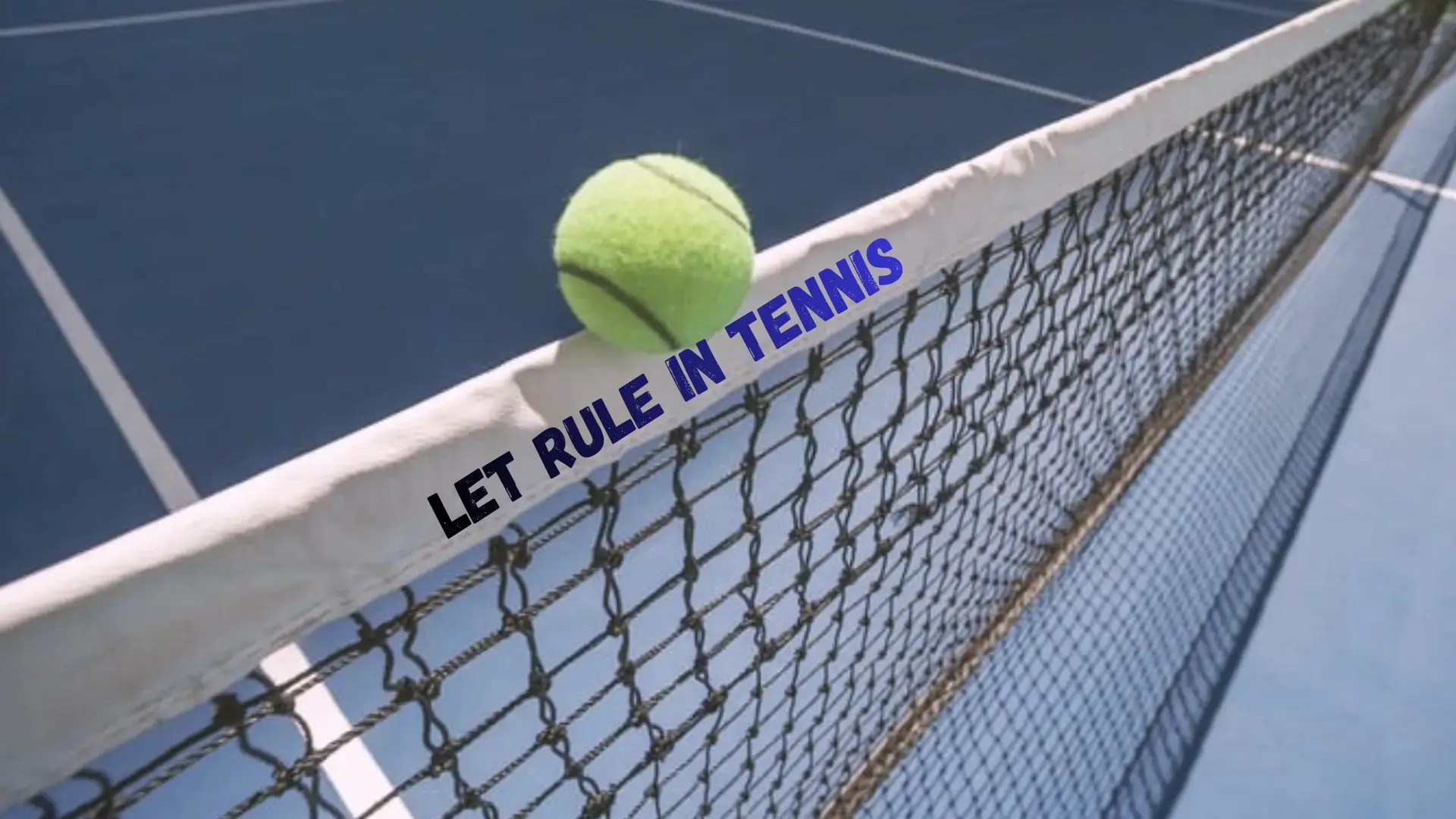
You toss the ball up and hit your serve. The ball travels over the net, but it clips the white tape on its way down. It alters the trajectory slightly. The ball still manages to land safely inside the correct diagonal service box.
That is a service let. The umpire will call it out, or if you are playing without an umpire, the receiver should call it.
What Happens Next?
If you hit a service let on your first serve, you get another first serve. You still have two chances to start the point.
If you hit a service let on your second serve, you get another second serve. You do not get your first serve back. You still only have one chance to get the ball in play without double-faulting.
There is no limit to how many service lets you can hit in a row. A few years ago, I was testing a stiff Babolat frame. I stepped up to the baseline and hit three consecutive service lets. The fourth serve finally cleared the net cleanly. I recorded my serve at 112 mph on a radar gun during that session, only for it to clip the tape and be called a let multiple times. It is incredibly frustrating, but the rule is the rule.
When It Is NOT a Service Let
Do not get confused. Hitting the net does not automatically equal a let.
If your serve hits the net tape and lands outside the service box, it is a fault. If it hits the net and bounces back onto your side of the court, it is a fault. The ball must land in the correct box for the let rule to apply.
If you struggle with your serve consistency, you might want to brush up on the different types of tennis shots to improve your mechanics.
The Rally Let (Outside Distractions)
Things get much more complicated once the serve is returned and the rally begins. A rally let occurs when a sudden, unforeseen distraction interrupts the point.
The most classic example is the rogue tennis ball. You are locked in a heavy baseline exchange. Suddenly, a ball from the adjacent court rolls directly behind your opponent.
Either player can and should call a let immediately. Stop hitting. Stop moving. Call "let" loudly so your opponent hears you. Safety is the priority here. Rolling your ankle on a stray ball is a great way to tear a ligament and ruin your summer season.
When a rally let is called, you replay the entire point. You go all the way back to the first serve.
The Drawback of Self-Officiating
Here is a genuine negative regarding the let rule in amateur tennis. Without a chair umpire, the rule relies heavily on the honor system. This creates a massive loophole for gamesmanship.
I have played against guys who wait until they are losing the point to magically "notice" a ball rolling softly at the fence forty feet away. They call a let just as I am setting up for an easy put-away volley. It is infuriating.
The rule states you must call the let as soon as the hindrance occurs. You cannot wait to see if your shot goes in before calling it. If you suspect your opponent is abusing the rule, call them out on it. Matches should be won with rackets, not technicalities.
Equipment Hindrances
What happens when your gear fails you mid-point? The rules handle equipment issues very specifically.
The Hat Falling Off Scenario
Imagine you are sprinting for a wide backhand. You stretch out, and your hat flies off your head, landing in the middle of the court.
The first time this happens, your opponent has the right to stop play and call a let. You will replay the point. The ITF views this as an unintentional hindrance.
However, you cannot keep dropping your clothes on the court. If your hat falls off a second time in the same match, it is no longer a let. You will automatically lose the point. The umpire will rule it a deliberate hindrance. I always advise players to wear properly fitted gear. Leave the loose accessories in your bag.
Vibration Dampeners
Vibration dampeners are notorious for flying off strings. If your dampener pops off and lands on your side of the court, you keep playing. It is your problem.
If it flies over the net and lands on your opponent's side, they can call a let the first time it happens. Again, the second time, you lose the point. I once tested a cheap novelty dampener that kept flying off every time I hit a heavy topspin forehand. I had to rip it off my strings in the middle of a match just to avoid forfeiting points.
Comparing this to playing with a broken string reveals an interesting distinction. If your string breaks mid-rally, you do not get a let. You must finish the point with the broken racket. Equipment failure is generally your responsibility, whereas a dampener flying through the air is treated as a visual hindrance to your opponent.
Let vs. Hindrance: Knowing the Difference
People often confuse a let with a hindrance. They are related but have very different outcomes.
A let stops the point and results in a replay.
A hindrance is when a player does something out of the ordinary to distract their opponent. A hindrance results in the loss of a point.
For example, if you yell loudly right as your opponent is about to hit an overhead smash, you lose the point. That is a hindrance. If a bird flies out of the sky and hits the net mid-rally, that is a let. We replay the point. You can read more about hindrance rules on the ATP Tour official site.
Professional vs. Amateur Rules
The way we play at the local club differs slightly from what you see on television.
On the pro tour, chair umpires use a specialized electronic net cord sensor. You will often hear a loud beep when the serve clips the tape. This removes human error from the service let call. The umpire makes the call instantly.
In amateur tennis, we rely on our eyes and ears. If you hear the distinct 'ping' of the ball hitting the tape, and the ball lands in, call it. If you and your opponent disagree, the player on the receiving side usually gets the final say on service calls, depending on local league rules.
There has been an ongoing debate about abolishing the service let entirely. Some college tennis divisions actually play "no-let" rules to speed up the game. If the serve hits the net and drips over, you have to run up and hit it. It adds a chaotic element to the match. Personally, I prefer the traditional rule. A net-cord winner on a serve feels incredibly cheap.
If you are struggling to keep track of games and points, you should definitely read our comprehensive guide on what love means in tennis. It breaks down the bizarre scoring system step-by-step.
How to Handle Disputes on Court
You probably hate it when an opponent makes a questionable call. So do I.
When a dispute arises over a let, keep your cool. Walk up to the net and calmly ask them to explain what they saw. If they claim a ball rolled behind you, but you did not see it, you generally have to trust them.
However, if they call a let because a car honked its horn three streets over, you need to stand your ground. Normal background noise is never a valid reason to replay a point. If they refuse to back down, you might need to call a tournament official to monitor your court.
Understanding the flow of a match is critical. You should also brush up on how tennis sets work so you know when the pressure is truly on.
Frequently Asked Questions
No. If a ball rolls onto the court after you hit a clear, unreturnable winner, the point stands. You cannot call a let to save a point you have already definitively lost. The hindrance must actually impact the ongoing play.
No. You can hit ten service lets in a row. You will just keep replaying that exact same serve. There is no penalty for hitting multiple service lets, though it is incredibly annoying for everyone involved.
That is not a let. That is a standard service fault. The ball must land in the correct service box for the let rule to trigger. If it hits the net and flies into the fence, you lose that serve.
Any player on the court can officially call a let. You must call it loudly and immediately when the distraction happens. You cannot wait to see if your shot goes out first. In professional matches, only the umpire calls the service lets using the electronic sensor.
Breaking a string during a rally does not qualify for a let. You must finish the current point with the broken racket. If you stop playing early, you will automatically forfeit the point. General equipment failure is your responsibility. It is not treated as an unpredictable outside distraction. Get out there, keep your eyes open for stray balls, and play hard. Knowing the rules gives you a quiet confidence on the court. See you on the court.