How to Choose Tennis Shoes & Replace Timeline
Disclosure: RacketEdge is an Amazon Associate and earns from qualifying purchases.
To choose tennis shoes, first determine your court surface (hard or clay) to select the correct outsole. Next, match your movement style to the shoe category (stability for baseline grinders, lightweight for speed scramblers) and ensure the midfoot shank is completely rigid to protect your arches.
When players walk into a tennis shop, they focus on finding the best racket. They demo different weights, head sizes, and strings. But they treat their footwear as an afterthought, choosing whatever sneaker is on sale or looks flashiest.
This is a mistake. Your tennis shoes are your interface with the court. Using the wrong shoe affects your footwork, slows your court speed, and exposes you to joint fatigue and ankle sprains. Learning how to choose tennis shoes involves understanding the biomechanics of court movement and foot support.
Having playtested dozens of shoes on hard and clay courts, I developed a simple selection playbook. In this guide, I will show you step-by-step how to choose tennis shoes, fit them correctly, and identify the signs that your shoes have reached the end of their lifespan.
1. Tennis Shoe Structural Specifications (Statics)
To evaluate shoe construction, compare the technical parameters (statics) of the two primary categories: Stability-focused and Speed-focused shoes:
| Design Parameter | Stability Category (e.g. Asics Gel Resolution 9) | Speed Category (e.g. Nike Vapor Pro 2) | Biomechanical Significance |
|---|---|---|---|
| Weight (Men's Size 9) | 380g to 450g (Heavier) | 310g to 350g (Lightweight) | Speed focuses on speed; stability on protection |
| Midsole Drop Height | 10mm to 12mm | 4mm to 6mm | Low-profile drop height improves court feel |
| Midfoot Shank Material | Rigid TPU or Carbon Fiber Plates | Lightweight Plastic | Prevents arch collapse and foot twisting |
| Outsole Durability (DIN) | 30 to 40 mm³ (Extremely Durable) | 50 to 60 mm³ (Medium Durability) | Lower DIN abrasion rating resists hard court wear |
| Toe Guard Thickness | 4.0mm to 5.0mm Polyurethane | 2.0mm to 3.0mm Molded Rubber | Reinforces frame for players who drag their toes |
| Cushioning Hardness | 55 Shore C (Firmer, stable) | 48 Shore C (Softer, responsive) | Stiffer foam prevents heel roll during stops |
| Playability Lifespan | 50 to 60 court hours | 35 to 45 court hours | Midsole foam collapses under repeated lateral cuts |
2. Step-by-Step Selection Playbook
To find your perfect shoe, follow these three steps:
Step 1: Match Your Court Surface
First, look at where you play.
- Hard Courts (HC): Require an outsole compound designed to withstand concrete friction. Brands use durable rubber compounds (like Nike's XDR or Asics' AHAR+). The tread pattern is a modified herringbone design with pivot points to allow sliding while maintaining traction.
- Clay Courts: Require a full herringbone zig-zag pattern with no flat spots. This groove pattern channels clay granules away from the sole, allowing players to slide with control. Using a hard court shoe on clay results in slipping, increasing groin strain risks.
Step 2: Match Your Movement Style
Next, evaluate your movement on court:
- The Baseline Grinder (Stability): If you spend matches running side-to-side along the baseline, you need a stable shoe. These shoes feature thick lateral side walls (lateral claws) and stiff midfoot shanks to protect your ankle joints during heavy stops and slides.
- The Court Scrambler (Speed): If you play all-court doubles or rely on quick sprints, choose a lightweight shoe. These shoes use low-profile midsoles to maximize acceleration and allow for rapid changes of direction.
Step 3: Check Fit Width and Toe Space
Tennis shoes fit tighter than running shoes because they need to lock the foot in place. When trying on shoes:
- Check the Toe: Ensure you have 1/2 inch of space in front of your toes. When you stop suddenly, your foot slides forward. If your toes touch the front, you will get "tennis toe" (bruised, black toenails).
- Verify Midfoot Locking: The shoe should hug your arch snugly. If your heel slips up when walking, you will get blisters.
3. Biomechanics: Why Running Shoes Fail on Court
According to clinical guidelines published by the American Podiatric Medical Association (APMA), running shoes are unsafe for tennis play:
- Deceleration Forces: Tennis involves rapid lateral deceleration forces reaching 3 to 4 times your body weight.
- Running Shoe Lack of Support: Running shoes are designed only for forward movement, featuring soft uppers and high midsoles with no lateral support.
- Ankle Roll Risk: Using a running shoe on a tennis court causes the foot to slide over the edge of the sole, leading to lateral ankle ligament sprains (ankle rolls) and plantar fascia strain.
Additionally, manufacturers test hard court outsoles using the DIN 53516 Abrasion Standard (measured in volume loss). Running shoes have high volume loss indices, meaning a concrete hard court will wear through their outsoles in under 5 hours of play, whereas tennis-specific outsoles last for dozens of hours.
4. When to Replace Your Tennis Shoes
Do not wait for your shoes to fall apart. Hitting in worn shoes is a leading cause of knee and heel pain. Run your shoes through this three-step playability audit:
Sign 1: Tread Balding
Look at the bottom of the outsole, especially under the ball of the foot and toe. If the herringbone grooves have worn smooth and you see flat, shiny spots, the shoe has lost its traction. Sidelong stops will become slippery, increasing groin strain risks.
Sign 2: Midsole Collapse (The "Sore Knees" Test)
Midsole cushioning is made of polyurethane or EVA foam. Over time, the repeated impact of landing compress the foam, making it hard. If you notice your knees, shins, or heels feel unusually sore after a match, your midsole has collapsed and can no longer absorb impact shock.
Sign 3: Upper and Toe Guard Rips
Aggressive players drag their trailing foot on serve and baseline slides. If you have worn through the rubber toe guard and exposed the fabric mesh underneath, the shoe will tear open shortly and needs replacement.
5. Summary Recommendation
- Buy a stability shoe if you want maximum joint cushioning, suffer from ankle rolls, and play daily on concrete.
- Buy a speed shoe if you want to feel fast, prefer a low ride height, and do not mind replacing your shoes every few months.
- Always leave 1/2 inch of toe space to prevent bruised toenails, and replace your shoes every 45 to 60 hours of court play to protect your joints.
Recommended Gear Mentioned in This Guide
Recommended Performance Racket
*RacketEdge is an Amazon Associate. We earn a commission on qualifying purchases.
Recommended Performance Racket
*RacketEdge is an Amazon Associate. We earn a commission on qualifying purchases.
Recommended Performance Racket
*RacketEdge is an Amazon Associate. We earn a commission on qualifying purchases.
Frequently Asked Questions
How much space should be at the toe of a tennis shoe?
Keep a thumb's width of space (approx 1/2 inch) between your longest toe and the front of the shoe. Sizing too tight will cause painful 'tennis toe' (bruised toenails) during sudden stops.
How do I know when my tennis shoes are dead?
Replace your shoes if the outsole rubber wears smooth, if you feel sore knees after play (midsole collapse), or if the upper mesh rips, exposing the side of your foot.
Do tennis shoes stretch out?
Synthetic leather and TPU uppers stretch very little. Fabric or mesh models will soften slightly, but you should never buy a tennis shoe that feels painfully tight expecting it to stretch.
Should I wear two pairs of socks to play tennis?
Many players wear double socks to reduce blister friction and improve cushioning. If you plan to do this, try on new tennis shoes while wearing both pairs of socks to ensure correct fit.
What does a six-month outsole guarantee cover?
If you wear through the outsole rubber and expose the inner midsole foam within six months of purchase, you can mail the shoes back to the manufacturer for a free replacement pair.
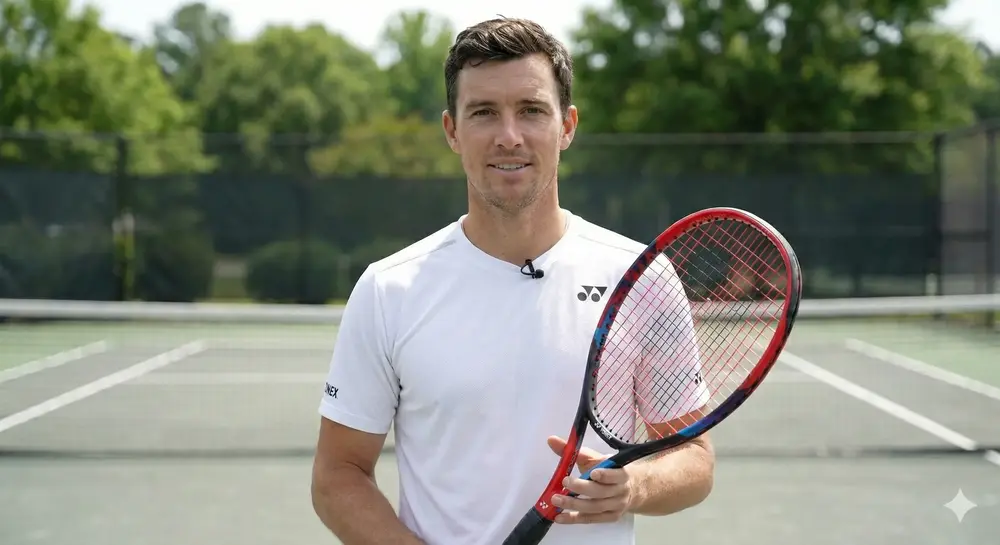
Chris Davies
Chris Davies conducts on-court playtesting and technical reviews to write guides for intermediate and advanced players. His reviews are grounded in baseline tests.