How to Practice Tennis Alone: Wall & Solo Drills
Disclosure: RacketEdge is an Amazon Associate and earns from qualifying purchases.
To practice tennis alone, use a brick or concrete practice wall to run forehand/backhand block drills, perform shadow swings in front of a mirror to train muscle memory, use a home ball machine for high-repetition feeds, and execute footwork ladder drills.
One of the biggest hurdles to improving in tennis is finding a consistent practice partner. Your friends might have different work schedules, or their skill levels might not match yours, resulting in short, erratic rallies that do not help either player build rhythm.
Many players assume that if they cannot find a partner, they cannot practice. However, practicing alone is one of the fastest ways to build muscle memory. Without the distraction of keeping score or chasing erratic shots, you can isolate specific issues in your swing path, train your footwork, and run high-repetition drill sequences.
According to the United States Tennis Association (USTA) Player Development coaches, "Solo practice, particularly wall work, is the secret weapon of great champions. Hitting against a wall increases your stroke repetition rate threefold compared to normal rallying, allowing players to build muscle memory and refine footwork adjustment steps at a highly accelerated pace."
Additionally, the International Tennis Federation (ITF) Coaching Manual notes: "Developing self-reliance through individual training is critical for player development. Solo drills, including shadow swings and target serves, allow a player to isolate mechanical flaws and develop internal feedback loops without the pressure of point play."
To help you maximize your solo practice sessions, this guide outlines the primary individual training methods, compares them in a detailed technical specifications matrix, and delivers structured drills you can perform alone.
1. Solo Training Methods & Specifications
Different solo training methods target different aspects of your game. The table below outlines the primary solo practice options, detailing the equipment required, repetition rates, and skill focuses.
Technical Training Matrix
| Training Method | Equipment Required | Repetitions / Hour | Core Skill Focus | Skill Level | Space Requirements | Cost |
|---|---|---|---|---|---|---|
| Practice Wall | Racket, balls, concrete wall | 1,200 – 1,800 | Early preparation, quick reaction, footwork | Beginner to Pro | 30 x 15 ft wall area | Free / Low |
| Ball Machine | Machine, 100+ balls, court access | 600 – 900 | Stroke consistency, footwork drills, endurance | Intermediate to Pro | Full tennis court | High |
| Serve Basket | Racket, hopper, 75+ balls | 120 – 180 | Toss consistency, shoulder mechanics, accuracy | All Levels | Half tennis court | Low |
| Shadow Swings | Racket, full-length mirror | N/A (Non-impact) | Muscle memory, body rotation, balance | All Levels | Small indoor room | Free |
| Tethered Trainer | Weighted base, elastic cord, ball | 300 – 500 | Hand-eye coordination, basic timing | Beginner | Driveway or backyard | Low |
| Agility Ladder | Agility ladder, cones | N/A (Fitness) | Foot speed, calf endurance, agility | All Levels | 15 x 5 ft flat surface | Low |
2. Method 1: The Practice Wall (The Ultimate Partner)
A brick, concrete, or wood practice wall is the most valuable tool a tennis player can use. The wall does not miss, does not get tired, and returns every shot with the exact spin and speed you hit it with.
       +--------------------------------------------+
       |               PRACTICE WALL                |
       |  (White line painted at 3 feet / net height) |
       +--------------------------------------------+
                             ^
                             | (Ball rebounds at same speed)
                             v
               +----------------------------+
               |  35-40 FT GROUNDSTROKE ZONE|
               |  - Let ball bounce once    |
               |  - Focus on early prep     |
               +----------------------------+
The Key Wall Drills:
- The Early Prep Drill: Stand 35 feet away from the wall. This distance simulates the path from the baseline to the net, giving you time to react. The moment the ball leaves your racket, take your backswing. Focus on hitting consecutive forehands. Aim to hit 20 in a row without making a mistake.
- The Alternating Groundstroke Drill: Hit a forehand, react to the rebound, adjust your feet, and hit a backhand. Repeat this alternating pattern. This drill forces you to move your feet and adjust your spacing, which helps build dynamic balance.
- The Volley Block Drill: Stand 8 to 10 feet from the wall. Hit continuous volleys without letting the ball bounce. Keep your racket head up and use short, compact punching motions.
3. Method 2: Shadow Swings in Front of a Mirror
You do not need a court or even a ball to improve your stroke mechanics. Shadow swings—performing your stroke motion without a ball—are highly effective for training muscle memory.
When you hit a ball, your brain focuses on where the ball is going. This focus can cause you to overlook mechanical errors, such as dropping your wrist or failing to rotate your shoulders. Shadow swings remove this distraction, letting you focus entirely on your form.
How to Practice Shadow Swings:
- Stand in Front of a Mirror: Hold your racket and stand in a ready position facing a full-length mirror.
- Slow-Motion Swings: Perform your forehand swing at 25% speed. Watch your racket path. Ensure your racket face is vertical and out in front of your body at the contact point.
- Check the Extension: Verify your follow-through. Does the racket finish over your opposite shoulder, with your chest facing the mirror?
- Repeat Daily: Performing 50 slow, deliberate shadow swings daily helps correct form errors faster than hitting 500 erratic balls on the court.
4. Method 3: Ball Machines and Basket Feeding
If you have access to a tennis court, you can practice solo using a ball machine or a simple basket of balls.
The Serve Basket Session:
The serve is the only shot in tennis that you control completely. It is also the easiest stroke to practice alone.
- Bring a Hopper: Take a basket of 75 balls to the court.
- Focus on the Toss: A consistent toss is the foundation of a good serve. Stand sideways behind the baseline. Practice tossing the ball 20 times without swinging. Catch the ball with your tossing arm extended. The ball should land slightly in front of your front foot.
- Target Drills: Place target cones or towels in the service box (deep corners and down the T). Hit 20 serves to each target, focusing on your toss height and catching the ball at full extension.
The Ball Machine Session:
- Isolate One Shot: Set the machine to feed consistent balls to your forehand side. Hit 50 shots, focusing on your footwork and clean contact, then switch to the backhand side.
- The 2-Line Drill: Set the machine to feed balls alternating between your forehand and backhand. This setup forces you to split-step, run to the ball, adjust your spacing, and recover to the center after every shot.
5. Method 5: Footwork and Agility Conditioning
Tennis is a game played with your feet. If you are out of position, your stroke mechanics will collapse. You can run these drills alone on any flat surface:
- The Drop-Ball Reaction Drill: Stand behind the baseline. Hold a tennis ball out at shoulder height and drop it. As the ball leaves your hand, split-step (hop lightly on the balls of your feet). Once the ball bounces, sprint forward, execute a shadow swing, and side-shuffle back to your starting position.
- Agility Ladder Drills: Run high-knees, lateral shuffles, and "in-and-out" patterns through a footwork ladder. This builds calf endurance and foot agility, helping you stay light on your feet during long matches.
By committing to regular solo practice sessions, you can refine your footwork, build muscle memory, and improve your consistency. This individual preparation ensures you are ready to play your best when you next step onto the court with an opponent.
Recommended Gear Mentioned in This Guide
Recommended Performance Racket
*RacketEdge is an Amazon Associate. We earn a commission on qualifying purchases.
Recommended Performance Racket
*RacketEdge is an Amazon Associate. We earn a commission on qualifying purchases.
Recommended Performance Racket
*RacketEdge is an Amazon Associate. We earn a commission on qualifying purchases.
Frequently Asked Questions
Is practicing against a wall good for tennis?
Yes, the practice wall is one of the most effective tools for tennis development. Because the wall returns every ball at the same speed you hit it, it forces early racket preparation, active split-stepping, and rapid footwork adjustment, accelerating your reaction time.
How far should I stand from a tennis wall?
For groundstroke practice, stand approximately 30 to 40 feet away from the wall. This distance simulates the path from the baseline to the net and back, giving you sufficient time to prepare your backswing, read the bounce, and execute a complete follow-through.
What are shadow swings in tennis?
Shadow swings are full-stroke motions executed without a ball. By performing shadow swings in front of a mirror, you can analyze your balance, body rotation, racket path, and contact point, cementing correct motor patterns without the distraction of hitting a ball.
How can I practice my serve alone?
You can practice your serve alone by bringing a hopper of tennis balls to a court and hitting serves from behind the baseline. Focus on developing a consistent ball toss, hitting different targets in the service boxes, and filming your motion to analyze form.
Can I use pressureless balls for wall practice?
Yes, pressureless tennis balls are ideal for wall practice. Unlike pressurized balls, which lose internal gas and go flat quickly when struck against hard concrete or brick, pressureless balls rely on their thick rubber core, maintaining their bounce indefinitely.
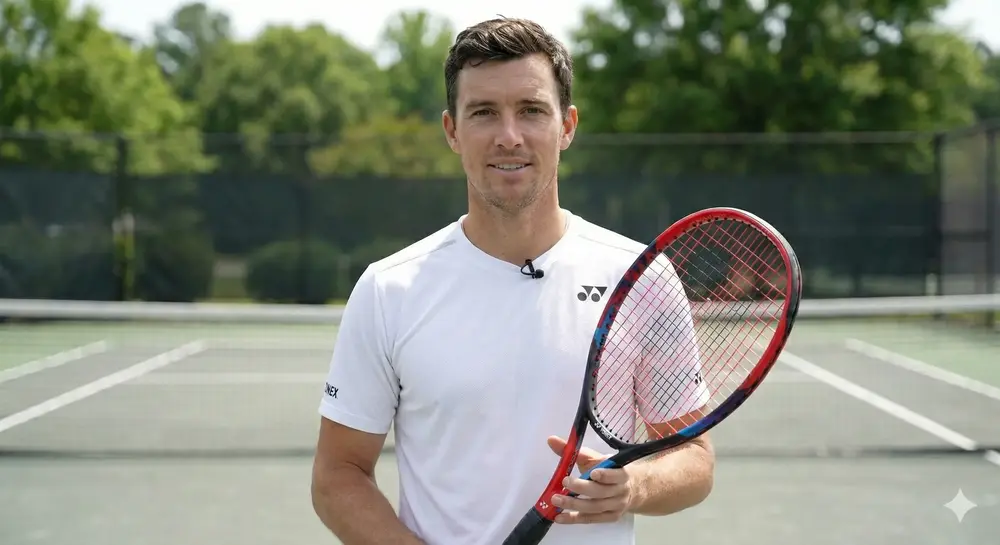
Chris Davies
Chris Davies conducts on-court playtesting and technical reviews to write guides for intermediate and advanced players. His reviews are grounded in baseline tests.