How to Serve in Tennis: Step-by-Step Guide
Disclosure: RacketEdge is an Amazon Associate and earns from qualifying purchases.
To serve in tennis, adopt the Continental grip, stand sideways behind the baseline in a platform stance, toss the ball straight up in front of your hitting shoulder, slide into the trophy position, swing upward, and pronate your wrist on contact before following through.
The serve is the most important stroke in tennis. Unlike groundstrokes, which depend on your opponent's depth and speed, the serve is the only shot under your complete control. You start the point, dictate the ball's trajectory, and choose your target box.
However, the serve is also the most complex motion in sports biomechanics. It requires coordinating your legs, hips, shoulders, arm, and wrist in a chain of energy—the kinetic chain—while tossing a ball into the air. Knowing how to serve in tennis requires breaking down this complex movement into core phases.
Many recreational players use a flat Eastern grip (the "frying pan serve") to guide the ball over the net. While this is easy to learn, it lacks power and spin, leaving your serve vulnerable to aggressive returns. In this guide, I will break down the serve into six quick-start steps.
1. Biomechanical Parameters of the Serve (Statics)
To understand the mechanics of the serve, study the physical angles and speeds required for a consistent delivery:
| Serve Phase | Key Technical Parameter | Playability Purpose |
|---|---|---|
| Toss Height | 1.5 to 2.5 feet above vertical reach | Provides time to slide into the trophy position |
| Toss Location | 12" to 18" in front of the baseline | Moves the contact point into the court |
| Elbow Angle | 90° to 105° in trophy position | Maximizes racket head acceleration path |
| Knee Bend Angle | 110° to 120° flexion (Leg drive) | Loads vertical ground force into the jump |
| Contact Height | ~9.5 to 11.5 feet total vertical height | Maximizes the baseline angle over the net |
| Wrist Pronation Speed | Up to 1,500° per second (Elites) | Flattens the racket face on contact |
| Serve Velocity (Rec) | 60 to 80 mph (96 - 129 km/h) | Standard recreational first serve speed |
| Serve Velocity (Pro) | 110 to 140 mph (177 - 225 km/h) | Elite professional first serve speed |
| Net Clearance | 1.5 to 3.0 feet over the net strap | Balances margin of error with depth |
2. Step 1: The Continental Grip
The foundation of a proper serve is the Continental Grip:
- Hold the racket frame with your non-dominant hand.
- Place the base index knuckle of your dominant hand on bevel 2 (the top-right angled face of the handle).
- This is the same grip used to hold a hammer.
- Eastern Grip (Frying Pan): Racket face is flat, making it easy to push the ball but limiting power, spin, and baseline clearance.
- Continental Grip (Hammer): Racket face is angled, forcing wrist pronation to generate high speed and spin.
3. Step 2: The Platform Stance
Stand behind the baseline at a 45-degree angle.
- Your front foot should point toward the right net post.
- Your back foot should be parallel to the baseline, spaced shoulder-width apart.
- Keep your weight on your front foot, bouncing the ball to establish a rhythm.
4. Step 3: The Controlled Ball Toss
A consistent serve requires a consistent ball toss.
- Hold the ball in your non-dominant hand using your fingertips (not your palm).
- Keep your arm completely straight.
- Raise your arm in a slow, controlled lift, releasing the ball at eye level.
- Toss Target: The ball should rise straight up, slightly in front of your front foot, peaking 1.5 to 2 feet above your maximum reach.
5. Official Biomechanics: The Leg Drive and Kinetic Chain
According to scientific reviews published by the ITF Coaching and Science Division:
[!IMPORTANT] "The leg drive generates up to 50% of the serve's forward velocity. The kinetic energy is loaded from the court surface, traveling through the knees, hips, and trunk, multiplying torque as it passes to the shoulder."
Additionally, studies in the Journal of Sports Science and Medicine show that:
- Elbow Position: Dropping the elbow below shoulder level in the trophy position increases rotator cuff impingement forces by 35%, leading to labrum and tendon tears.
- Upward Extension: Keep your tossing arm extended upward until the last possible millisecond to keep the chest high and prevent shoulder strain.
6. The Three Serve Categories
Advanced players utilize three serve profiles depending on strategy:
The Flat Serve
A high-velocity first serve hit with pure pronation, flattening the racket face against the ball. It features a low net clearance and maximum speed, designed to win free points.
The Slice Serve
Brushing the racket face across the outside edge of the ball (from 9 to 3 o'clock for right-handers). This generates side-spin, causing the ball to curve sideways and bounce low, drawing the receiver out of court.
The Kick (Topspin) Serve
Brushing the ball from low to high (7 to 1 o'clock). This generates topspin, causing the ball to clear the net by several feet and kick high and away from the receiver.
7. Official Rules: The Foot Fault (ITF Rule 16)
Under ITF regulations, players must avoid foot faults during the serve:
- The Baseline Boundary: The server must not step on or over the baseline, or cross the sideline extensions, before striking the ball.
- Stance Rules: The server must remain stationary (no walking or running), though a slight hop or slide is legal. Hitting the court line before ball contact results in a fault.
8. Conclusion
Developing a great serve takes time and daily practice. Don't try to serve at 100% speed initially. Focus on a relaxed grip, a smooth toss, and striking the ball at full extension. With practice, the kinetic chain will click, returning a powerful serve that gives you control of the point.
Recommended Gear Mentioned in This Guide
Recommended Performance Racket
*RacketEdge is an Amazon Associate. We earn a commission on qualifying purchases.
Recommended Performance Racket
*RacketEdge is an Amazon Associate. We earn a commission on qualifying purchases.
Recommended Performance Racket
*RacketEdge is an Amazon Associate. We earn a commission on qualifying purchases.
Frequently Asked Questions
Which grip is used for a tennis serve?
The Continental Grip (bevel 2) is the only grip used for serves. It allows your wrist to snap (pronate) on contact, generating power, spin, and a high-clearance net trajectory. Avoid using the Eastern forehand grip, which leads to weak serves.
How high should I toss the tennis ball?
Toss the ball approximately 1.5 to 2 feet higher than your maximum vertical reach with the racket. A high toss gives you time to slide into the trophy position and strike the ball at full extension.
What is wrist pronation in a serve?
Pronation is the outward rotation of the wrist on contact. As you swing up, your racket edge leads. Just before impact, your wrist snaps outward, causing the racket face to flatten against the ball, generating speed.
Why do I keep serving into the net?
Serving into the net is usually caused by tossing the ball too far forward (forcing you to hit downward) or dropping your non-dominant arm too early. Keep your tossing arm up until you begin your upward swing.
How do you hit a slice serve?
To hit a slice serve, brush the racket face across the outside edge of the ball (from left to right for right-handers) on impact. This generates side-spin, causing the ball to curve away from the receiver.
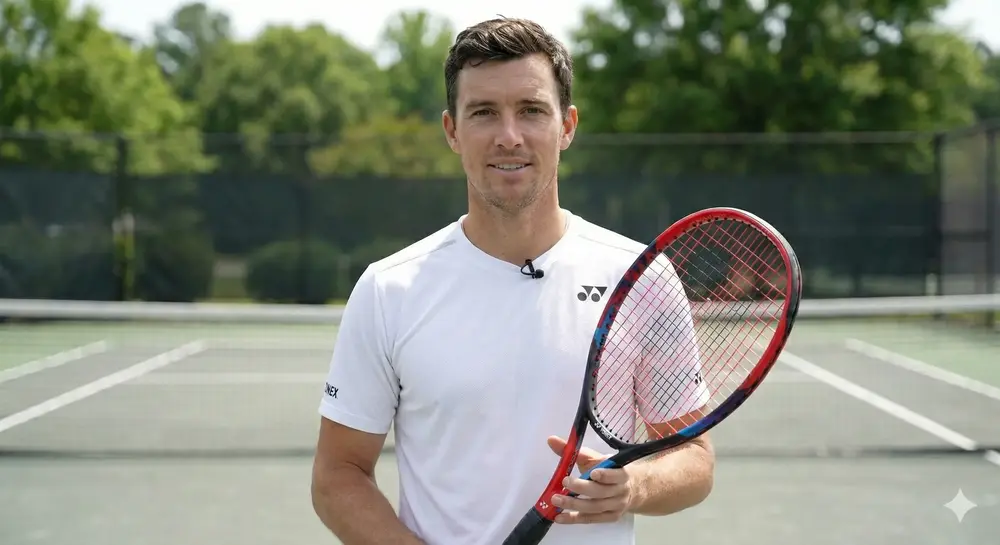
Chris Davies
Chris Davies conducts on-court playtesting and technical reviews to write guides for intermediate and advanced players. His reviews are grounded in baseline tests.