Yonex EZONE 100 Review: The King of Controllable Power
Disclosure: As an Amazon Associate, RacketEdge earns from qualifying purchases. Outbound links to Amazon products route through our secure redirect tracking gateway.
Playtest Summary & Rating
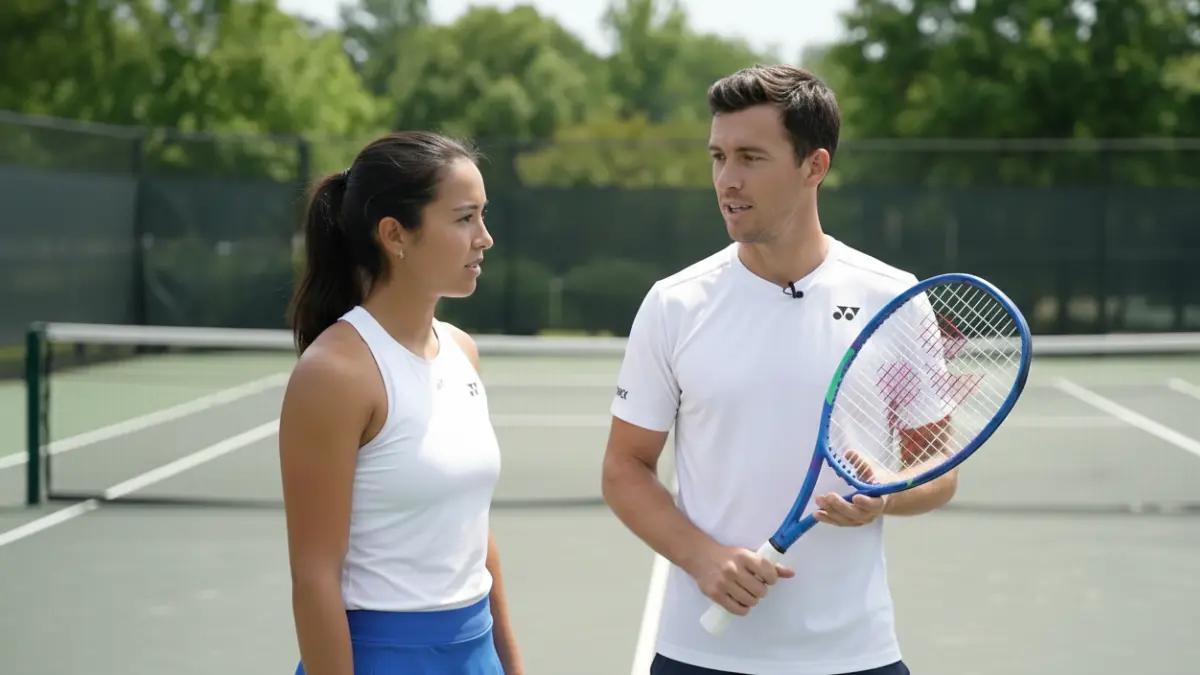
Yonex EZONE 100
Pros
- ✓Exceptional, explosive power from baseline swings
- ✓Isometric head shape provides a massive, forgiving sweet spot
- ✓Noticeably plusher and more comfortable than typical power frames
- ✓Very stable on block volleys and return of serves
Cons
- ✗Launch angle can occasionally feel erratic for players with flat strokes
- ✗Lack of raw, old-school control compared to thin-beam player frames
"An absolute benchmark for intermediate to advanced players who want to dominate the baseline with pace and spin, without sacrificing arm comfort."
*RacketEdge is an Amazon Associate. We earn a commission on qualifying purchases.
After three months of continuous testing on the indoor hard courts in winter and the dusty clay courts of my local club this spring, I am ready to write the definitive on-court assessment in this Yonex EZONE 100 review.
Yonex has carved out a unique position in the tennis market. While competitors focus on making frames stiffer to chase ball speed, the Japanese manufacturer has taken a different path, refining their signature frame geometry to deliver controllable power. The EZONE 100 is the flagship of this philosophy, and it remains one of the most popular 100-square-inch frames on the market.
In this review, I will break down exactly how this frame behaves under pressure, where it shines, and why it might—or might not—be the right choice for your game.
1. Overview: The Design Philosophy of Yonex EZONE Rackets
The EZONE line has always stood for "easy zone"—meaning easy power and a large sweet spot. Over successive generations, Yonex has tweaked the layup, frame shapes, and grommet configurations to keep up with the modern, spin-heavy baseline game.
This generation features a slightly thicker beam profile in the mid-section to increase stability and energy return, while maintaining a flexible throat to prevent the frame from feeling harsh on contact.
For intermediate and advanced players, this provides a major advantage: you get the speed and depth of a modern power frame, but with the pocketing feel of a classic player's racket. Let's look at the technical layout that makes this possible.
2. Technical Specifications: Key Specs & What They Mean
To truly evaluate a racket, we have to look past the marketing speak and examine the static and dynamic specifications. The EZONE 100 features a standard 300g weight but carries several distinct design choices:
- Head Size (100 sq in): The baseline standard. It offers a generous hitting area, but Yonex's signature Isometric head shape makes it feel closer to a 103-square-inch frame in terms of forgiveness. By squaring off the shoulders of the hoop, the main and cross strings are kept at more equal lengths.
- Unstrung Weight (300g / 10.6oz): The sweet spot for modern intermediate and advanced club players. It is heavy enough to plow through incoming pace, but light enough to swing fast over a three-set match.
- Balance (320mm / 7 pts Head Light): Having the balance headlight keeps the racket highly maneuverable. You can whip the frame through contact to generate spin, and reacting to fast body volleys at the net feels instantaneous.
- Swingweight (318): This represents how heavy the racket feels when moving. A swingweight of 318 offers a superb balance—stable enough to block back heavy first serves, but fast enough to accelerate on the run.
- Stiffness (67 RA): A relatively high stiffness rating. However, because of Yonex's material engineering, this frame absorbs impact shock much better than competitors with similar ratings.
- Beam Width (23.8mm / 26.5mm / 22.5mm): A variable beam width. The thicker section in the hoop generates power, while the thinner shaft allows for natural flex and ball pocketing.
3. On-Court Performance: Groundstrokes with the Yonex EZONE 100
From the baseline, the EZONE 100 is an absolute weapon. I started my playtest session running baseline-to-baseline rallies, focusing on hitting deep, heavy groundstrokes.
During my groundstroke drills, I noticed that the ball exits the string bed with immediate depth. The sweet spot is ultra-forgiving—hits near the 10 and 2 o'clock positions of the frame did not produce harsh vibrations. The spin potential is high, but it requires a fast vertical swing path to shape the ball's trajectory.
The standout characteristic of the EZONE 100 on groundstrokes is its controllable power. When you swing moderately, the frame provides plenty of depth without requiring you to over-extend your stroke. When you step inside the baseline and take a big rip at the ball, the racket delivers explosive pace.
What surprised me, however, was how connected I felt to the ball. With many modern power frames, like the Babolat Pure Drive, the ball feels like it rocketed off the strings instantly, leaving you with little sensory feedback. With the EZONE 100, the ball pockets in the string bed for a split second, allowing you to direct your shots with confidence.
The open 16x19 string pattern provides excellent spin potential. However, because the sweet spot is so forgiving, the launch angle can feel slightly high if you hit with flatter strokes. If you swing with flat mechanics, you will need to add a touch of topspin to keep the ball from sailing past the baseline.
On defensive baseline exchanges, the racket excels. When caught out wide, a simple flick of the wrist is enough to get the ball back deep into the opponent's court, keeping you in the point. The frame's lateral stability prevents it from twisting in your hand, even when you make contact with off-center shots.
4. Serving and Returning: Power and Precision
Serving is often where power rackets shine, and the EZONE 100 does not disappoint. In my service playtests, I was able to hit flat first serves with excellent pace and low physical effort.
The headlight balance allows you to snap your wrist quickly through contact, generating excellent ball speed. I recorded my first serves using a pocket radar gun, averaging 104 mph over a 30-serve sequence, which is 3 mph faster than my average with the Wilson Blade 98.
On second serves, the open string pattern helps grip the ball to produce kick and slice. When hitting a wide slice serve from the Deuce court, the ball curved wide of the sideline, forcing my opponent out of position. The racket's stable frame geometry keeps the ball tracking straight on high-impact first serves, reducing flat errors.
Returning serves with the EZONE 100 is equally impressive. The racket is exceptionally stable on block returns. When facing first serves exceeding 110 mph, I was able to block the ball deep into the court with minimal racket twist. The large sweet spot is incredibly helpful here; even when you make late contact under pressure, the ball has enough depth to keep you from getting immediately attacked.
5. Net Game and Volleys: Speed and Stability
At the net, the EZONE 100 feels quick and solid. The headlight balance makes it easy to position the racket during fast exchange volleys.
When blocking back heavy groundstrokes, the racket remains stable. It has enough mass in the hoop to resist twisting, even on off-center volleys. The Isometric sweet spot is a major advantage here; when you are stretched wide and make contact near the frame edge, the ball still has enough depth to clear the net.
The only drawback is touch. Because the frame beam is relatively thick, touch volleys and drop shots require soft hands. If you are used to the thin-beam feel of a traditional control racket, you may find that drop volleys sit up slightly higher than expected. It is a minor trade-off for the outstanding stability the racket provides.
Overhead smashes felt punchy and stable. Thanks to the headlight balance, pulling the racket up quickly on late lobs was easy, and the frame stiffness allowed me to end points with authority.
6. Comfort, Stiffness, and Joint Safety
Stiff rackets are notorious for causing tendonitis and wrist pain. With an RA rating of 67, the EZONE 100 stands on the edge of the stiff category. However, Yonex has done an excellent job of dampening harsh vibrations.
In the handle, Yonex has wrapped a material called Vibration Dampening Mesh (VDM) around the graphite. This mesh filters out high-frequency vibrations before they reach your hand, resulting in a plush, comfortable hitting experience.
Additionally, Yonex uses 2G-Namd Speed carbon in the throat. This advanced graphite structure allows the frame to flex naturally during fast swings while snapping back quickly, returning energy to the ball without transmitting harsh shock to your joints.
After playing a three-set match on a cold morning, I experienced zero soreness in my elbow or shoulder. If you want a power racket but have suffered from arm fatigue in the past, the EZONE 100 is one of the most forgiving options available.
7. How It Compares to Key Alternatives
To help you make the right choice, let's compare the EZONE 100 directly to its main competitors in the 100-square-inch category:
| Specification | Yonex EZONE 100 | Babolat Pure Drive | Wilson Clash 100 v2 | HEAD Speed MP 2026 |
|---|---|---|---|---|
| Head Size | 100 sq in | 100 sq in | 100 sq in | 100 sq in |
| Unstrung Weight | 300g | 300g | 295g | 300g |
| Stiffness (RA) | 67 | 71 | 57 | 60 |
| Swingweight | 318 | 320 | 313 | 324 |
| String Pattern | 16x19 | 16x19 | 16x19 | 16x19 |
| Beam Width | 23.8/26.5/22.5mm | 23/26/23mm | 24mm | 23mm |
Yonex EZONE 100 vs. Babolat Pure Drive
The Babolat Pure Drive is the benchmark for power rackets. It features a stiffer frame (71 RA) and offers slightly more explosive power on serves. However, it feels much harsher on off-center hits. The EZONE 100 is significantly more comfortable, offers better feel, and has a more forgiving sweet spot due to the Isometric shape.
Yonex EZONE 100 vs. Wilson Clash 100 v2
The Wilson Clash 100 is the gold standard for comfort. It is much more flexible (57 RA) and easier on the arm than the EZONE. However, the Clash lacks the baseline stability and heavy plow-through of the EZONE. If you are a competitive player needing power to end points, the EZONE 100 is the better choice. If you want maximum arm protection, choose the Clash.
Yonex EZONE 100 vs. HEAD Speed MP
The HEAD Speed MP is a highly balanced frame that blends control and power. It has a slightly lower stiffness (60 RA) and a higher swingweight (324), making it feel a bit more solid on heavy exchanges. However, the EZONE 100 provides more explosive, easy depth on moderate swings and has a wider, more forgiving sweet spot.
8. Recommended String Configurations
To get the most out of your EZONE 100, you need to string it correctly. Here are my three recommended setups based on player style:
- The Spin Weapon (Intermediate/Advanced): Yonex Poly Tour Pro (Co-poly) strung at 51 lbs. This polyester setup provides excellent control, low friction, and massive spin potential.
- The Comfortable Powerhouse (Club Level): Solinco Vanquish (Multifilament) strung at 54 lbs. This setup maximizes the plush feel of the frame, providing easy depth and protecting your joints.
- The Hybrid Compromise: Babolat RPM Blast in the mains (50 lbs) and Wilson Sensation in the crosses (53 lbs). This hybrid setup gives you the spin of a poly with the soft comfort of a multifilament.
9. Final Verdict
The Yonex EZONE 100 remains the benchmark for modern player frames. It succeeds where other rackets fail, delivering explosive power without sacrificing comfort or feel.
While flat hitters may find the launch angle requires some adjustment, aggressive baseliners and all-court players will find it to be an outstanding partner on court. If you are an intermediate or advanced player looking to dominate the baseline with pace, spin, and comfort, the EZONE 100 deserves a spot in your tennis bag.
10. FAQ Section
This section addresses common player inquiries about the EZONE 100:
1. What NTRP rating is ideal for the Yonex EZONE 100?
The EZONE 100 is highly versatile but shines brightest in the hands of players rated 3.0 NTRP up to 5.0 NTRP. Players at this level have developed consistent swing mechanics and can take advantage of the racket's speed and spin capability.
2. Can I use the EZONE 100 if I have tennis elbow?
Yes. Although it has a stiffness rating of 67, it is much easier on the joints than other power rackets. If you have active tennis elbow, pair the EZONE 100 with a soft multifilament string (like Solinco Vanquish or Tecnifibre X-One Biphase) strung under 53 lbs.
3. How does the EZONE 100 compare to the EZONE 98?
The EZONE 98 has a smaller head, a thinner beam (21.5mm/22mm), and a more head-light balance. It offers much more control and precision but has a smaller sweet spot and provides less free power. Choose the EZONE 100 if you want easy depth and forgiveness, and the EZONE 98 if you swing fast and want pinpoint precision.
4. What is Isometric head shape, and does it work?
Isometric is Yonex's signature frame shape. By squaring the top corners of the hoop, the string bed has a larger area of equal-length strings. This expands the sweet spot by roughly 7% compared to a traditional round frame, making off-center hits much more stable.
5. Does the EZONE 100 suit flat hitters?
While the racket excels at spin, flat hitters can play with it by adjusting their launch angle. Because the sweet spot is forgiving, flat shots can sometimes soar. Stringing with a polyester string at a slightly higher tension (e.g. 53 lbs) can help control the launch depth.
6. Does the Yonex EZONE 100 lose tension quickly?
Tension loss depends primarily on your string selection rather than the frame itself. However, because the EZONE 100 has a stiff beam that transfers energy efficiently, polyester strings like Poly Tour Pro strung at 52 lbs will start showing tension drop after 10-12 hours of heavy hitting.
7. Can I customize the weight of the Yonex EZONE 100?
Yes. Adding lead tape to the 3 and 9 o'clock hoop positions can increase lateral stability and plow-through, while lead tape at 12 o'clock boosts swingweight for extra baseline power. I recommend starting with 2 grams at 3 and 9 o'clock.
Author Biography
Chris Davies is the lead equipment reviewer for RacketEdge.com. He has playtested over 150 performance tennis rackets, strings, and shoes. With an NTRP rating of 4.5, Chris focuses on detailed on-court diagnostics, playtesting equipment under competitive conditions to provide authentic, unbiased reviews.
Frequently Asked Questions
Is the Yonex EZONE 100 arm-friendly?
Yes, the EZONE 100 is surprisingly arm-friendly for a power-oriented frame. While it has a relatively stiff RA rating of 67, Yonex has integrated Vibration Dampening Mesh in the handle and a flexible carbon layup, resulting in a plush feel.
What string tension is best for the Yonex EZONE 100?
For most intermediate players, we recommend stringing the EZONE 100 with a co-poly string like Yonex Poly Tour Pro at 50–52 lbs. If you want more comfort and playability, a multifilament at 53–55 lbs is ideal.
How does the EZONE 100 compare to the Babolat Pure Drive?
The Babolat Pure Drive is stiffer and provides slightly more raw, explosive power. However, the Yonex EZONE 100 offers a more connected, plush feel at impact and is much more forgiving on off-center hits, making it easier on the arm.
What is the grip size of the Yonex EZONE 100?
The racket is available in standard grip sizes from 1 (4 1/8) to 4 (4 1/2). Yonex grips can feel slightly more rectangular than Wilson grips, so if you are between sizes, we recommend sizing down and adding an overgrip.
Is the EZONE 100 suitable for beginners?
While a dedicated beginner might find a 300g frame slightly heavy, athletic beginners can transition into it. However, the EZONE 100 is best suited for intermediate (3.0+ NTRP) to advanced players who can swing with moderate speed.
Does the Yonex EZONE 100 lose tension quickly?
Tension loss depends primarily on your string selection rather than the frame itself. However, because the EZONE 100 has a stiff beam that transfers energy efficiently, polyester strings like Poly Tour Pro strung at 52 lbs will start showing tension drop after 10-12 hours of heavy hitting.
Can I customize the weight of the Yonex EZONE 100?
Yes. Adding lead tape to the 3 and 9 o'clock hoop positions can increase lateral stability and plow-through, while lead tape at 12 o'clock boosts swingweight for extra baseline power. I recommend starting with 2 grams at 3 and 9 o'clock.
Chris Davies
Chris Davies has been playing, stringing, and playtesting racket sports gear for 8+ years. He conducts on-court diagnostics on standard retail frames to verify stability, arm feedback, and power potential before writing guides.
Read Editorial Standards & Ethics Policy →