Best Tennis Backpacks: Compact Bag Review
Disclosure: Outbound buttons on this roundup guide route to Amazon via our secure redirect logs. RacketEdge is an Amazon Associate and earns from qualifying purchases. We playtest every frame.
For many club players, carrying a massive 12-pack racket bag is overkill. Unless you are playing multi-day tournaments and carrying six frames, a large bag is dead weight that clutters your car trunk.
For daily commutes, bicycle riding, or quick work-to-court transitions, the best tennis backpack is the superior choice.
A dedicated tennis backpack holds 1 to 2 rackets securely in a rear compartment, using locking zippers to keep the handles from sliding. It features a shoe tunnel to isolate dirty outsoles and a laptop sleeve to protect your work computer from clay court dust.
I playtested the top portable tennis backpacks, evaluating handle stability, weight distribution, and compartment layout.
In this guide, I will review the three best tennis backpacks of 2026 and show you how to select the right backpack for your daily games.
Ergonomic Engineering: Frame Stability and Straps
Designing a functional tennis backpack requires careful consideration of physics and ergonomics. Carrying a tennis racket presents unique challenges compared to a standard school backpack.
The Physics of Center of Gravity
A standard tennis racket is 27 inches long, and the frame weight is concentrated in the head. When placed in a backpack, the rackets extend above the shoulder line. This shifts the bag's center of gravity upward and backward.
If the backpack is poorly designed, it will pull backward on your shoulders, causing neck fatigue and lower back strain.
To counter this, high-quality tennis backpacks:
- Angle the racket pocket: Positioning the racket pocket slightly forward brings the weight closer to your back, aligning it with your spine.
- Padded Shoulder Straps: Thick, contoured straps distribute the load across the shoulders and upper back.
- Sternum Straps: A chest buckle stabilizes the load, preventing the bag from shifting laterally when walking or riding a bicycle.
The Importance of Locking Zippers
Rackets are top-heavy, and their movement during walking can create a wedge effect. With standard zippers, this vibration will slowly pull the sliders down, opening the pocket.
Without self-locking zippers, a racket can fall out onto the concrete during a commute. Modern tennis backpacks address this by using heavy-duty, self-locking zippers that only slide when the pull-tab is pulled directly.
Official Guidelines & Authority Recommendations
Tennis bags and backpacks must accommodate equipment that meets strict size regulations. The International Tennis Federation (ITF) rules (Appendix II) state:
"The racket frame, including the handle, must not exceed 29 inches (73.7 cm) in overall length and 12.5 inches (31.7 cm) in overall width."
A high-quality tennis backpack must be designed to hold frames of these dimensions securely.
In addition, the United States Racquet Stringers Association (USRSA) emphasizes the importance of protecting rackets from extreme heat. According to the USRSA, exposure to temperatures above 120°F (which can quickly be reached inside a car trunk on a warm day) will cause synthetic strings to lose their elasticity.
Polyester strings will lose tension rapidly, while natural gut can fray. This is why the USRSA recommends using thermal-lined compartments, which are now featured on premium tennis backpacks like the Wilson Super Tour.
Technical Specifications Comparison Table
The following table compares the materials, capacity, and physical dimensions of the top tennis backpacks:
| Backpack Model | Racket Capacity | Internal Volume | Fabric Durability | Thermal Protection | Laptop Compartment | Shoe Compartment | Empty Weight |
|---|---|---|---|---|---|---|---|
| Wilson Super Tour | 2 Rackets | 28 Liters | 900D Polyester & TPU | Yes (Thermoguard Foil) | Yes (Padded) | Yes (Ventilated) | 1.8 lbs (0.8 kg) |
| Head Tour Team | 2 Rackets | 25 Liters | 600D Polyester & PU | No | No (Main pocket sleeve) | Yes (Unventilated) | 1.4 lbs (0.6 kg) |
| Babolat Pure Line | 3 Rackets | 32 Liters (Expanded) | 800D Water-Resistant Poly | Yes (Isothermal Foil) | Yes (Padded) | Yes (Ventilated) | 2.0 lbs (0.9 kg) |
On-Court Product Reviews
Let's look at how our top three picks perform under daily playtesting conditions.
Wilson Super Tour Backpack: The Premium Standard
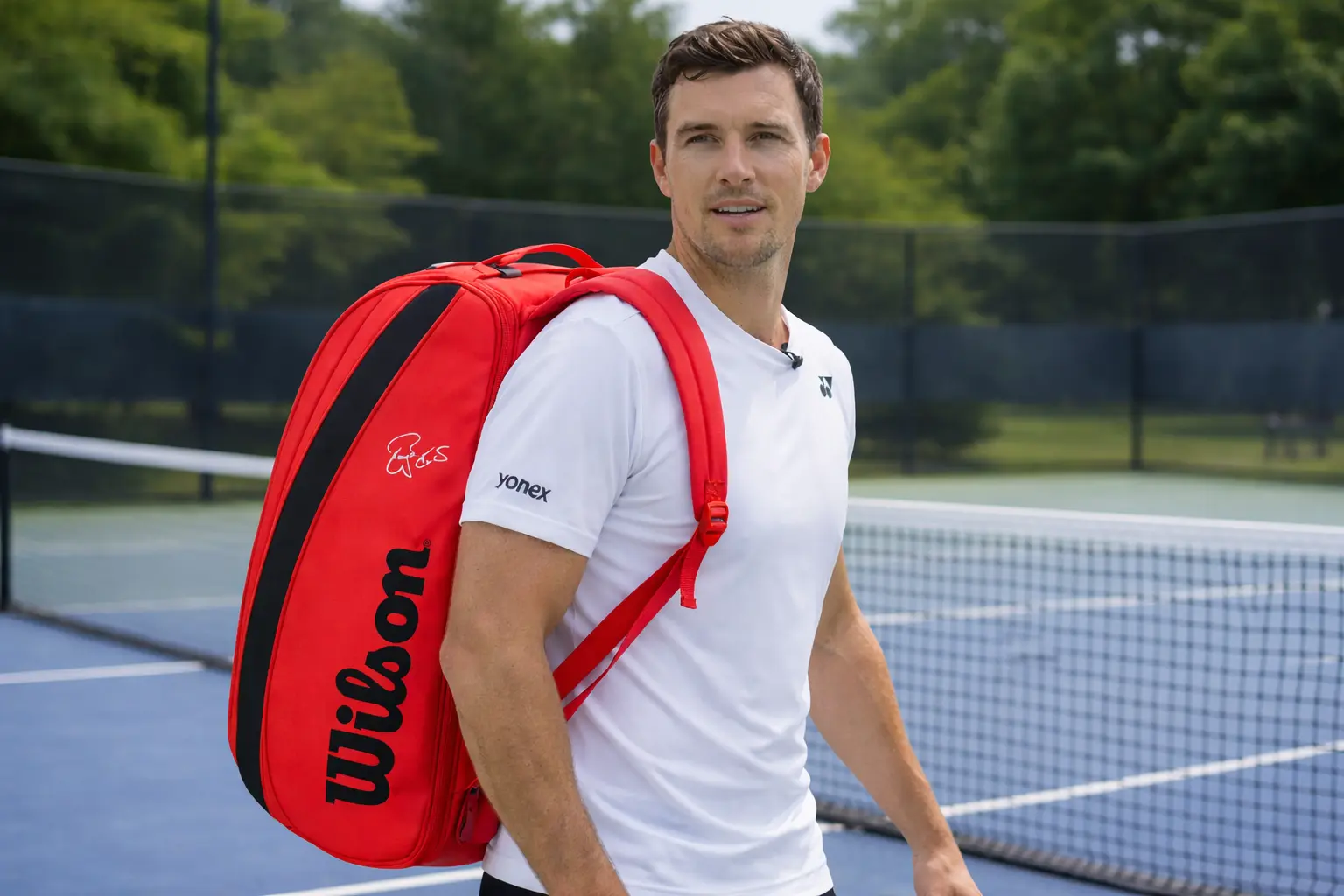
The Wilson Super Tour Backpack is designed for players who want premium features and durability in a compact size. It matches the design of Wilson's Super Tour racket bags.
Design and Materials
The backpack is constructed from a high-durability 900-denier polyester fabric, reinforced with thermoplastic polyurethane (TPU) side panels. The TPU panels give the bag structure, allowing it to stand upright on court benches and protecting it from dust and moisture.
On-Court Playtest Feedback
In playtests, the rear racket compartment easily accommodated two 100-square-inch frames. The compartment is lined with Wilson's Thermoguard foil insulation. This keeps strings protected from temperature spikes during hot commutes.
The main compartment features a padded laptop sleeve and plenty of room for balls, a towel, and extra shirts.
The shoulder straps are thickly padded and contoured, providing excellent comfort when the bag is fully loaded. The bottom shoe pocket is ventilated, keeping dirty outsoles isolated from your clean gear.
Durability and Long-Term Wear
The 900D fabric and TPU panels resist scuffing and wear exceptionally well. The zippers are heavy-duty and slide smoothly, and the stitching is reinforced at key stress points. The matte finish can show dirt over time, but it is easy to clean with a damp cloth.
- Pros:
- Thermoguard lining protects strings from heat
- TPU side panels keep the bag upright on the court
- Thickly padded shoulder straps provide excellent comfort
- Dedicated ventilated shoe compartment
- Cons:
- High price point compared to entry-level bags
- Matte surface shows scuff marks easily
Verdict
The premier choice for players who want premium materials and thermal protection. The Wilson Super Tour is a durable, well-organized backpack that is perfect for daily commutes.
Head Tour Team Backpack: The Lightweight Value
The Head Tour Team Backpack is a lightweight, functional bag designed for club players who want a simple, budget-friendly option.
Design and Materials
Constructed from 600D polyester with a polyurethane backing, this backpack is lightweight and flexible. It features a simple design without the rigid panels of premium bags, allowing it to pack flat when empty.
On-Court Playtest Feedback
On court, the Head Tour Team is highly practical. It holds two rackets securely in the rear compartment, using high-friction zippers to keep the handles upright.
The main compartment has enough space for a change of clothes and a can of balls. The bottom shoe pocket works well, although it lacks ventilation mesh, which means you should remove damp shoes promptly after play.
The side mesh pockets are convenient for holding water bottles or cans of balls, and the top accessory pocket is great for keys, dampeners, and overgrips.
Durability and Long-Term Wear
While the 600D fabric is lighter than that of the Wilson, it resists tearing and abrasion well. The shoulder straps have thinner padding but are comfortable enough for moderate loads. The zippers are lightweight but function reliably.
- Pros:
- Lightweight, flexible design packs flat when empty
- Budget-friendly pricing for club players
- Side mesh pockets for water bottles and balls
- Easy-to-use compartment layout
- Cons:
- Lacks premium thermal foil insulation
- Shoulder padding is thin under heavy loads
Verdict
A fantastic, lightweight option for casual club players. The Head Tour Team is a reliable, value-driven backpack that covers all the basics without unnecessary bulk.
Babolat Pure Line Backpack: The Expanding Specialist
The Babolat Pure Line Backpack features a unique, versatile design that can adapt to different gear storage needs.
Design and Materials
Made from a water-resistant polyester fabric, this backpack features a unique fold-down front compartment. When you need to carry rackets, the front panel folds down, exposing a pocket that can hold up to three frames.
On-Court Playtest Feedback
In playtests, the folding design proved highly useful. The front racket pocket features a protective cover that zip-closes around the racket handles, protecting them from rain. This is a key advantage if you walk or ride a bicycle in wet climates.
When you aren't carrying rackets, the front panel folds up and clips into place, converting the bag into a standard school or travel backpack.
The main compartment is expandable, providing plenty of room for clothes, shoes, and a laptop. The base is reinforced with rigid plastic, allowing the pack to stand upright on court benches without tipping.
Durability and Long-Term Wear
The water-resistant fabric keeps gear dry in light rain, and the reinforced base resists wear from rough concrete. The folding straps and buckles are durable, although the complex layout can take a moment to adjust.
- Pros:
- Folding cover protects racket handles from rain
- Expandable main compartment holds extra gear
- Versatile design converts to a standard backpack
- Rigid base keeps the pack standing upright
- Cons:
- Bulky profile when fully expanded
- Multiple straps and buckles can feel complex
Verdict
The most versatile backpack on the market. The Babolat Pure Line is the perfect choice for players who walk or bike in wet weather and want a bag that can double as a travel pack.
Commuter's Buying & Tuning Guide
Choosing the right tennis backpack requires matching the bag's features to your commute:
Commuting by Bicycle
If you ride a bicycle to the court, prioritize:
- Sternum Strap: A chest buckle is essential to keep the backpack centered on your back when leaning forward over the handlebars.
- Reflective Elements: Look for reflective trim or attachment points for safety lights during night rides.
- Locking Zippers: Ensure the racket compartment zippers lock securely to prevent handles from sliding out during rides.
Commuting from the Office
If you carry your gear to work, prioritize:
- Padded Laptop Sleeve: A dedicated sleeve keeps your computer secure and isolated from damp clothes.
- Sleek Design: Molded panels and clean lines (like the Wilson Super Tour) look professional in an office setting.
- Ventilated Shoe Pocket: Good ventilation is key to keeping odor contained while the bag sits under your desk.
Summary Verdict: Which Pack Fits Your Commute?
- Choose the Wilson Super Tour if you want thermal string protection, commute from work, and value premium build quality.
- Choose the Head Tour Team if you want a lightweight, simple pack for weekend games and are on a budget.
- Choose the Babolat Pure Line if you walk in damp climates, want to cover your racket handles, and need expandable storage capacity.
The Playtest Standings: Our Top Recommendations
Pros
- ✓Premium Thermoguard liner protects strings
- ✓Dedicated ventilated shoe compartment
- ✓Extremely comfortable padded shoulder straps
Cons
- ✗High price point
- ✗Matte finish shows scuff marks easily
"The benchmark for premium backpacks. Wilson included a foil-lined Thermoguard compartment to keep your string tension stable during hot commutes, and the build quality is top-notch."
*RacketEdge is an Amazon Associate. We earn a commission on qualifying purchases.
Pros
- ✓Lightweight and flexible shape
- ✓Budget-friendly club pricing
- ✓Side mesh pockets for water bottles
Cons
- ✗Lacks premium thermal insulation
- ✗Shoulder padding is relatively thin
"A fantastic, lightweight option for casual club players. It holds two rackets securely and features enough storage for shoes and balls without the bulk of molded side panels."
*RacketEdge is an Amazon Associate. We earn a commission on qualifying purchases.
Babolat Pure Line Backpack
Pros
- ✓Foldable racket flap covers handles completely
- ✓Expandable main compartment holds extra gear
- ✓Highly stable, free-standing base
Cons
- ✗Bulky profile when fully packed
- ✗Complex folding straps take time to lock
"The most versatile backpack available. The front racket pocket folds down to cover your racket handles completely, protecting them from rain, and expands to hold three frames if needed."
*RacketEdge is an Amazon Associate. We earn a commission on qualifying purchases.
Frequently Asked Questions
Exactly how many tennis rackets can a standard tennis backpack safely hold?
Most high-quality tennis backpacks are engineered to carry exactly 1 to 2 rackets in a dedicated rear compartment. The racket frames sit inside the pocket while the handles extend out of the top or side. Premium packs utilize locking, self-lubricating zippers to ensure the weight of the handles doesn't pull the compartment open during travel. A few specialized models, like the Babolat Pure Line, feature expandable folding flaps that can accommodate up to 3 frames when fully extended.
Is a tennis backpack or a traditional 12-pack bag better for club players?
For the majority of recreational club players, a tennis backpack is the superior choice. Backpacks offer lightweight portability, make commuting by bicycle or public transit easy, and take up minimal space in a car trunk or locker. Traditional 12-pack bags are designed for competitive tournament players who must carry 4 to 6 matched rackets, backup string reels, change of clothes, and recovery gear. Carrying a 12-pack bag for a casual one-hour hit is usually unnecessary bulk.
What is a laptop sleeve in a tennis backpack, and why is it necessary?
A laptop sleeve is a padded compartment located inside the main body of the backpack. It isolates your computer from damp clothes or clay court dust, allowing you to commute from work directly to the court. The padding protects the laptop from impacts when the bag is placed on concrete court benches. It also provides a clean, dry space for electronic accessories, notebooks, and keys, keeping them separate from your sweaty tennis gear.
Why do tennis backpacks have dedicated, ventilated shoe compartments?
Dedicated shoe compartments (often called shoe tunnels) are essential for isolating dirty court shoes from the rest of your gear. Tennis shoes accumulate clay dust, hard court grit, and moisture during play. Placing them in the main compartment would soil your clean clothes, towel, and grip wraps. The ventilation mesh allows moisture to escape, preventing the growth of odor-causing bacteria and mold within the bag during storage.
How do self-locking zippers function on a racket pocket?
Self-locking zippers feature high-friction zipper sliders and heavy-duty metal pull tabs that resist sliding down under the weight of the racket handles. When you zip the compartment closed around the racket necks, the sliders lock into place. They will not open unless you pull the tabs directly. This prevents the compartment from slowly sliding open while you walk or ride a bicycle, which would cause the rackets to shift or fall out of the pack.

Chris Davies
Chris Davies reviews, playtests, and strings tennis gear. His shootouts compare specifications under uniform conditions, providing intermediate and advanced players with verified court metrics.