Best Tennis Shoes for Ankle Support & Bad Knees
Disclosure: Outbound buttons on this roundup guide route to Amazon via our secure redirect logs. RacketEdge is an Amazon Associate and earns from qualifying purchases. We playtest every frame.
Tennis is an incredibly demanding sport that subjects your lower joints to extreme biomechanical stress. Unlike sports that involve running in a straight line, tennis is defined by explosive lateral sprints, sudden changes of direction, and high-impact vertical landings.
When you sprint sideways and slide or plant your foot to hit a groundstroke, your ankles must support your entire body weight and momentum. When you land from a jump serve on hard concrete, your knees absorb impact forces that can exceed three to four times your body weight.
Without proper footwear, this constant joint loading can lead to two common court injuries: lateral ankle sprains (rolled ankles) and patellar tendonitis (bad knees). To protect your joints, you need a shoe engineered with a rigid heel counter, a wide lateral outrigger, a supportive midfoot shank, and advanced shock-absorbing midsole materials.
I playtested the top stability and cushioning shoes on the market, evaluating lateral tipping resistance, heel collar security, forefoot flex, and knee impact protection.
In this guide, we will analyze the biomechanics of joint injuries on court, compare the three best tennis shoes for ankle support and knee protection of 2026, and show you how to select the right shoe to keep you playing pain-free.
1. Biomechanics of Court Injuries: Ankles and Knees
To understand why specialized tennis shoes are necessary, we must examine the injury mechanisms of the ankle and knee joints.
According to the American Academy of Orthopaedic Surgeons (AAOS):
"Inversion ankle sprains occur when the foot rolls inward, stretching or tearing the lateral ligaments on the outside of the ankle—most commonly the anterior talofibular ligament (ATFL). In sports involving pivoting, cutting, and jumping, a stable shoe with a rigid heel counter and lateral support is essential to prevent the ankle from rolling over the edge of the sole."
Furthermore, the American Podiatric Medical Association (APMA) emphasizes that:
"Proper athletic footwear for court sports should feature a wide, low-profile outsole to maximize surface contact and prevent lateral tipping. Stiff midfoot shanks are critical to prevent torsional twisting of the foot, which can strain the plantar fascia and destabilize the ankle."
Lateral Stop Mechanics:
Without Lateral Outrigger:
[Foot Slides Sideways] ➔ [Outsole Edge Catches Court] ➔ [Shoe Tips Over Outsole Edge] ➔ [Severe Inversion / ATFL Tear]

With Lateral Outrigger:
[Foot Slides Sideways] ➔ [Outrigger Extends Outsole Base] ➔ [Outsole Remains Flat & Slides] ➔ [Stable Stop / Ankle Protected]
Ankle Rollover (Inversion Sprains)
When you make a hard stop on a hard court, your body's momentum continues to travel sideways. If the upper material of your shoe is too flexible, or if the outsole base is too narrow, the side of your foot will push over the edge of the sole.
The outsole edge acts as a pivot point, and your ankle rolls inward under your weight. To prevent this, tennis shoes utilize rigid plastic walls (lateral chassis) and outriggers to widen the shoe's platform.
Knee Impact (Patellar Tendonitis and Cartilage Wear)
Hard courts provide zero shock absorption. When your heel strikes the concrete, a high-frequency shock wave travels up the tibia, through the patellar tendon, and into the meniscus of the knee joint.
Over a multi-set match, this repetitive pounding causes micro-tears in the tendon and wears down cartilage, leading to chronic knee pain. Specialized court shoes use dense polyurethane, gel, or composite plates to absorb this energy before it reaches your skeletal system.
2. Technical Specifications & Structural Analysis
Selecting the right shoe requires analyzing its structural elements. Below is a detailed technical comparison of the three market-leading shoes we tested on court.
| Feature / Spec | Asics Gel Resolution 9 | Yonex Eclipsion 5 | Wilson Rush Pro 4.0 |
|---|---|---|---|
| Weight (Men's 9 US) | 14.8 oz (419g) | 14.1 oz (399g) | 13.9 oz (394g) |
| Lateral Tech | Dynawall Chassis | 3D Graphite Power Plate | 4D Support Chassis 2.0 |
| Midsole Cushioning | Rearfoot & Forefoot Gel | Power Cushion+ | Energy Cell EVA |
| Outsole Rubber | AHAR+ (High durability) | Endurant Rubber | Duralast Rubber |
| Heel-to-Toe Drop | 10 mm | 12 mm | 9 mm |
| Heel Counter | External TPU Wrap | Internal Reinforced Cup | Molded Heel Wrap |
| Toe Box Width | Medium (Standard) | Snug / Narrow | Snug / Glove-like |
| Outsole Guarantee | Yes (6 Months) | No | Yes (6 Months) |
| Torsional Rigidity | 9.5 / 10 | 9.2 / 10 | 8.8 / 10 |
3. On-Court Product Reviews & Playtest Feedback
Let's look at how our top three picks perform under real match conditions, detailing their construction, benefits, and drawbacks.
Asics Gel Resolution 9: The Joint Shield
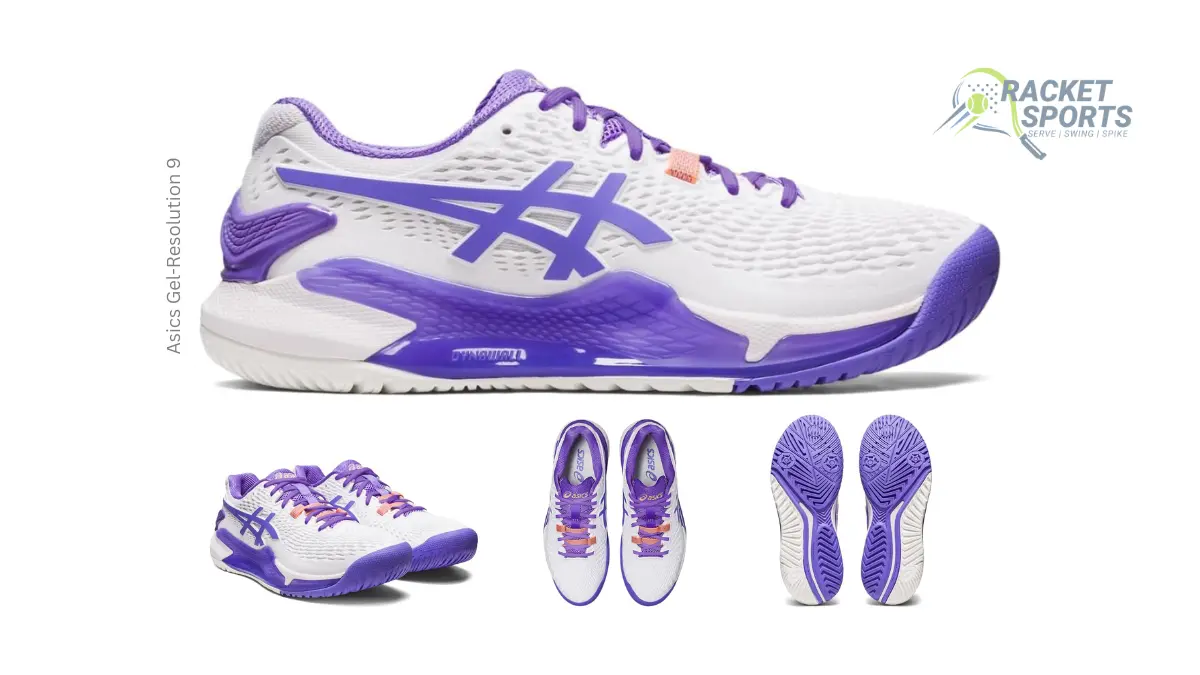
The Asics Gel Resolution 9 is widely regarded as the benchmark shoe for lateral stability. The key to its performance is the Dynawall chassis—a rigid polyurethane wall that wraps around the lateral midfoot and extends into the heel.
During playtests, the Gel Resolution 9 felt incredibly secure. When sliding wide on a forehand and stopping hard to recover, I could feel the Dynawall acting like a splint, holding the lateral side of my foot firmly over the midsole.
The wide outsole platform, complete with a prominent lateral outrigger, made it virtually impossible to tip the shoe sideways.
For players with bad knees, the Gel cushioning in both the heel and forefoot provides excellent shock absorption. Hard landings from overheads felt soft, and my knees felt significantly less fatigued after a two-hour session on concrete.
The drawback is that the upper is quite stiff and requires a 4-to-6 hour break-in period before it flexes naturally.
- Lateral Stability: Exceptional. The Dynawall prevents any rollover.
- Knee Protection: Outstanding. The Gel technology dampens hard impact.
- Fit/Comfort: Stiff at first, but highly cushioned once broken in.
Yonex Power Cushion Eclipsion 5: The Ankle Lock Champion
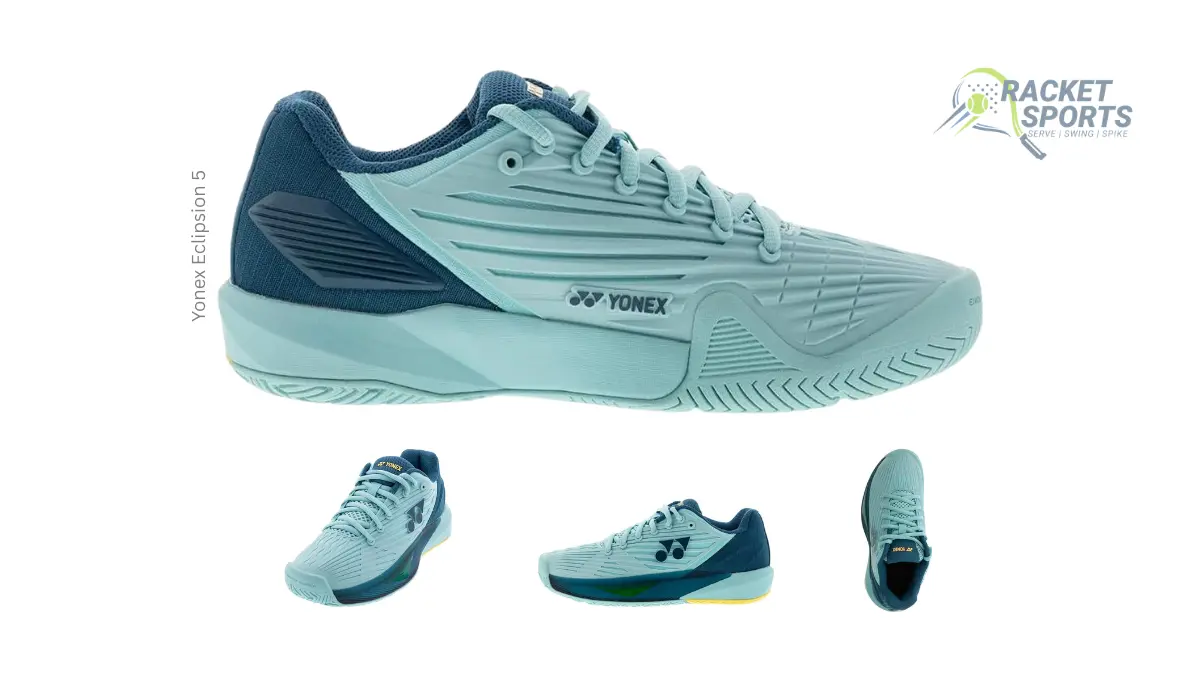
The Yonex Eclipsion 5 is the choice of top-tier professional players who require maximum stability and direct court feedback. It features a deep ankle collar lined with dense foam that locks your heel into the back of the shoe, preventing any heel slippage.
On court, the Eclipsion 5 excels at locking the ankle in place. The shoe utilizes a 3D Graphite Power Plate under the arch, which prevents the shoe from twisting in the middle during rapid changes of direction. This rigid midfoot shank ensures that your foot flexes only at the toes, stabilizing the ankle joint.
Yonex’s signature Power Cushion+ midsole is the standout feature for joint protection. According to Yonex, the material can rebound an egg dropped from 7 meters without breaking it.
During our playtests, serve landings felt highly cushioned, yet responsive. The shoe has a narrow fit, particularly in the toe box, which may not suit players with wide feet.
- Lateral Stability: Very High. The graphite plate prevents midfoot twisting.
- Knee Protection: High. Power Cushion+ absorbs and returns energy.
- Fit/Comfort: Snug and narrow, providing a locked-in, high-performance feel.
Wilson Rush Pro 4.0: The Responsive Support
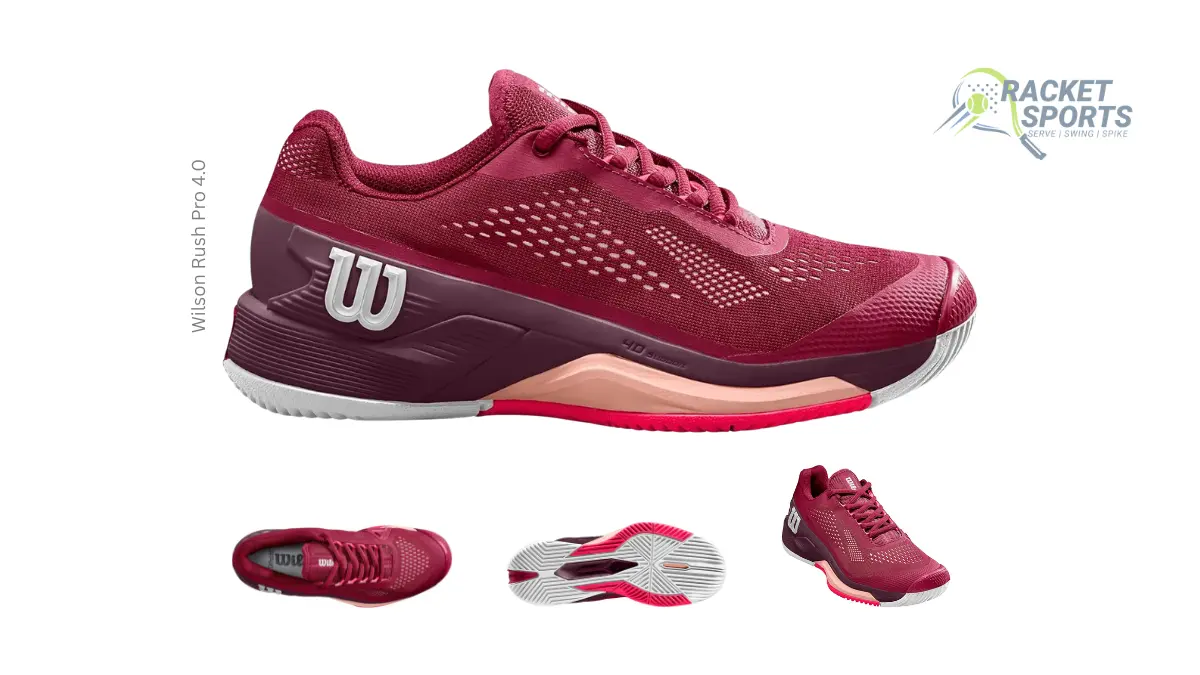
The Wilson Rush Pro 4.0 offers a faster, more flexible feel than the heavy Asics Gel Resolution. It uses a 4D Support Chassis 2.0—a split chassis design where one piece runs under the arch to provide lateral stability, while the forefoot is left flexible to allow for quick acceleration.
During playtests, the Rush Pro 4.0 was the most comfortable shoe out of the box. It uses an internal bootie construction (Sensifeel 2.0) that wraps around the foot like a sock, preventing any internal foot sliding.
The lateral stability is excellent for a lightweight shoe, though it does not feel quite as rigid or locked-in as the Asics Gel Resolution 9 on extreme lateral slides.
The midsole uses Energy Cell EVA foam, which provides a springy, responsive toe-off. While it is highly comfortable, it offers slightly less dampening of high-frequency concrete vibrations than the Asics Gel, making it a better fit for players who prioritize speed and responsiveness over maximum joint cushioning.
- Lateral Stability: High. The 4D chassis provides reliable support.
- Knee Protection: Moderate-High. Responsive cushioning with good court feel.
- Fit/Comfort: Glove-like out of the box with zero break-in required.
4. Fitting and Lacing Techniques for Ankle Security
Even the most stable shoe will fail to support your ankle if it is not fitted or laced correctly. To prevent heel slippage and maximize stability, follow these guidelines:
The Runner's Loop (Heel Lock Lacing)
Most performance tennis shoes have an extra eyelet at the very top of the collar. This eyelet is designed for the Runner's Loop lacing technique:
- Thread the lace on each side through the final extra eyelet from the outside in, creating a small loop on the outside of the shoe.
- Cross the laces and thread the left lace through the right loop, and the right lace through the left loop.
- Pull the laces downward and then upward. This action pulls the collar of the shoe snug around your ankle, locking your heel down into the cup and preventing the foot from sliding forward.
Sizing with Ankle Braces
If you wear active ankle braces (like the ASO Active Ankle or McDavid lace-up brace), you must bring them when buying shoes. Ankle braces add roughly 0.5 to 1.0 cm of width to the heel.
You may need to go up a half-size or look for shoes with a wider heel counter to accommodate the brace without compressing your foot and causing numbness.
5. Summary Verdict: Which Shoe Matches Your Needs?
Selecting the right shoe depends on your joint issues and movement style on court:
- Choose the Asics Gel Resolution 9 if you want the absolute highest level of lateral stability, suffer from knee pain, and want a highly durable shoe with a 6-month outsole guarantee.
- Choose the Yonex Eclipsion 5 if you want a secure heel-lock collar, play an aggressive baseline game, and prefer a snug, narrow, high-performance fit.
- Choose the Wilson Rush Pro 4.0 if you want a lightweight, fast court shoe that offers solid lateral support with a comfortable, sock-like fit out of the box.
The Playtest Standings: Our Top Recommendations
Pros
- ✓Exceptional lateral outrigger platform
- ✓Deep shock absorption for bad knees
- ✓Locks the heel securely in place
Cons
- ✗Stiff upper requires break-in
- ✗Heavy weight profile
"The gold standard for joint protection. The Dynawall chassis runs from the heel to the midfoot, acting like a splint to prevent lateral ankle rolls during slides."
*RacketEdge is an Amazon Associate. We earn a commission on qualifying purchases.
Pros
- ✓Snug, secure ankle collar lock
- ✓Power Cushion+ absorbs serve landing shock
- ✓Highly durable rubber outsole
Cons
- ✗Snug, narrow toe box width
- ✗Firm upper feel
"Excellent choice for competitive players. The Power Cushion+ midsole absorbs impact and rebounds dynamically, protecting bad knees from hard court landing shock."
*RacketEdge is an Amazon Associate. We earn a commission on qualifying purchases.
Wilson Rush Pro 4.0
Pros
- ✓Flexible forefoot with stable midfoot
- ✓Glove-like internal bootie fit
- ✓Responsive toe-off acceleration
Cons
- ✗Hard to slide foot inside
- ✗Snug toe box width
"A balanced, responsive shoe. It provides solid midfoot arch support to prevent overpronation, protecting both your ankles and knees without feeling clunky."
*RacketEdge is an Amazon Associate. We earn a commission on qualifying purchases.
Frequently Asked Questions
Why is lateral ankle stability so critical for tennis players?
Tennis requires constant, explosive side-to-side movements and sudden stops on hard surfaces. If you stop suddenly in a shoe that lacks lateral support, your foot can slide over the edge of the outsole, causing the ankle to roll outward and leading to an inversion ankle sprain (stretching or tearing the lateral ATFL ligament).
Do high-top tennis shoes actually prevent ankle sprains?
No, high-top shoes are rare in tennis because they restrict the ankle flexion needed for low, athletic baseline steps. True ankle support in tennis footwear comes from a rigid external heel counter, a stiff midfoot shank, and a wide lateral outrigger, rather than the height of the ankle collar.
What type of shoe cushioning is best for players with bad knees?
Highly dampening cushioning systems, like Asics Gel technology or Yonex Power Cushion+, are ideal. These systems absorb the high-frequency impact vibrations from hard courts, preventing those forces from traveling up the tibia and aggravating the knee joint and patellar tendon.
What is a lateral outrigger on a tennis shoe, and how does it work?
A lateral outrigger is an extension of the outsole rubber that protrudes outward on the pinky-toe side of the forefoot. By widening the shoe's base of support, it acts like a kickstand, preventing the shoe from tipping sideways during hard lateral stops and slide recoveries.
Can you wear a bulky ankle brace inside standard tennis shoes?
Yes, you can wear an ankle brace inside your tennis shoes if you have chronic instability. However, because braces add significant bulk, you should bring your brace when trying on shoes and consider going up a half-size to ensure a proper fit without pinching.
Chris Davies
Chris Davies reviews, playtests, and strings tennis gear. His shootouts compare specifications under uniform conditions, providing intermediate and advanced players with verified court metrics.