Best Tennis Shoes for Plantar Fasciitis: Relief Guide
Disclosure: Outbound buttons on this roundup guide route to Amazon via our secure redirect logs. RacketEdge is an Amazon Associate and earns from qualifying purchases. We playtest every frame.
If you wake up in the morning, step out of bed, and feel a sharp, stabbing pain in the bottom of your heel, you are dealing with plantar fasciitis. For tennis players, this injury is a nightmare. The sport's constant stopping, jumping, and sliding on concrete hard courts can aggravate the plantar fascia tendon, turning a fun match into a painful ordeal.
However, you do not have to quit tennis. Choosing the correct shoe can significantly reduce the strain on your foot. To help players manage this injury, I playtested the top stability and cushioning shoes on the market, evaluating arch stiffness, heel shock absorption, and ankle support.
In this guide, I will review the best tennis shoes for plantar fasciitis, explain the biomechanical features you need to check before buying, and share detailed technical specifications to help you make an informed decision.
1. Foot Biomechanics: What Plantar Fasciitis Needs
The plantar fascia is a thick, fibrous band of connective tissue that runs along the bottom of your foot, connecting your heel bone (calcaneus) to the base of your toes. It acts as a shock-absorbing bowstring, supporting the longitudinal arch of your foot and distributing weight when you walk, run, or jump.
When you play tennis, the impact force of landing a jump, sprinting to the net, or sliding wide on a hard court stretches this bowstring to its limit. If your shoe is too flexible or lacks structural stability, your arch collapses on impact, causing micro-tears at the attachment point on your heel bone. This leads to chronic inflammation, heel spurs, and intense pain.
According to the American Podiatric Medical Association (APMA), "Proper footwear is the first line of defense against plantar fasciitis. A shoe must feature a rigid shank to prevent torsional twisting, combined with a supportive heel counter that locks the heel in place, minimizing the micro-tears in the plantar fascia ligament during athletic activities."
Furthermore, technical testing by SATRA Technology, the leading independent footwear research authority, reveals that tennis-specific lateral movements generate localized impact loads on the heel that are up to three times greater than linear running. SATRA's research indicates that multi-density midsoles and gel-infused cushioning systems are highly effective at dampening these high-frequency vibrations before they propagate up the kinetic chain.
To manage this condition, a tennis player's shoe architecture must satisfy three core biomechanical criteria:
- Rigid Midfoot Shank: The middle of the shoe must not bend or twist. You can test this by trying to bend the shoe in half. If it folds in the middle, reject it. It must only bend at the forefoot.
- Deep Heel Cushioning: The midsole must absorb high-frequency concrete vibrations before they reach your heel bone.
- Firm Heel Counter: A stiff plastic cup around the heel prevents side-to-side ankle wobbles, reducing the strain on the foot's inner arch.
2. Technical Specifications & Material Properties
To compare the structural differences between our top playtested models, review the detailed technical specifications below. These properties directly affect how each shoe stabilizes the arch and dampens heel impact.
| Technical Specification | Asics Gel Resolution 9 (Wide 2E) | K-Swiss Hypercourt Supreme | Yonex Power Cushion Eclipsion 5 |
|---|---|---|---|
| Midsole Material | FlyteFoam + Rearfoot/Forefoot Gel | Surgelite EVA Foam | Power Cushion+ EVA Compound |
| Shank Type | Rigid TPU Dynawall Chassis | Internal Molded EVA Chassis | 3D Power Graphite Plate |
| Heel-to-Toe Drop | 10.5 mm | 9.0 mm | 10.0 mm |
| Weight (Men's Size 9) | 14.8 oz (419 g) | 13.0 oz (368 g) | 14.3 oz (405 g) |
| Upper Material | Polyurethane (PU) Flexion Fit | Synthetic Leather & Mesh | Durable Skin Light (Polyurethane) |
| Outsole Material | AHAR+ High-Abrasion Rubber | Aösta II Non-Marking Rubber | Endurant Rubber Compound |
| Insole Type | Removable Ortholite | Removable Molded EVA | Removable Synchro-Fit |
| APMA Seal of Acceptance | Yes (Standard Version) | No | No |
| Torsional Stiffness | Extreme (Excellent) | Moderate (Good) | Extreme (Excellent) |
| Recommended Foot Type | Wide / Flat / Neutral | Wide / High Arch / Neutral | Narrow to Medium / Neutral |
3. On-Court Product Reviews
Let's look at how our top three picks perform on court to protect your arches and relieve heel pain during intense rallies.
Asics Gel Resolution 9 (Wide 2E): The Arch Guard
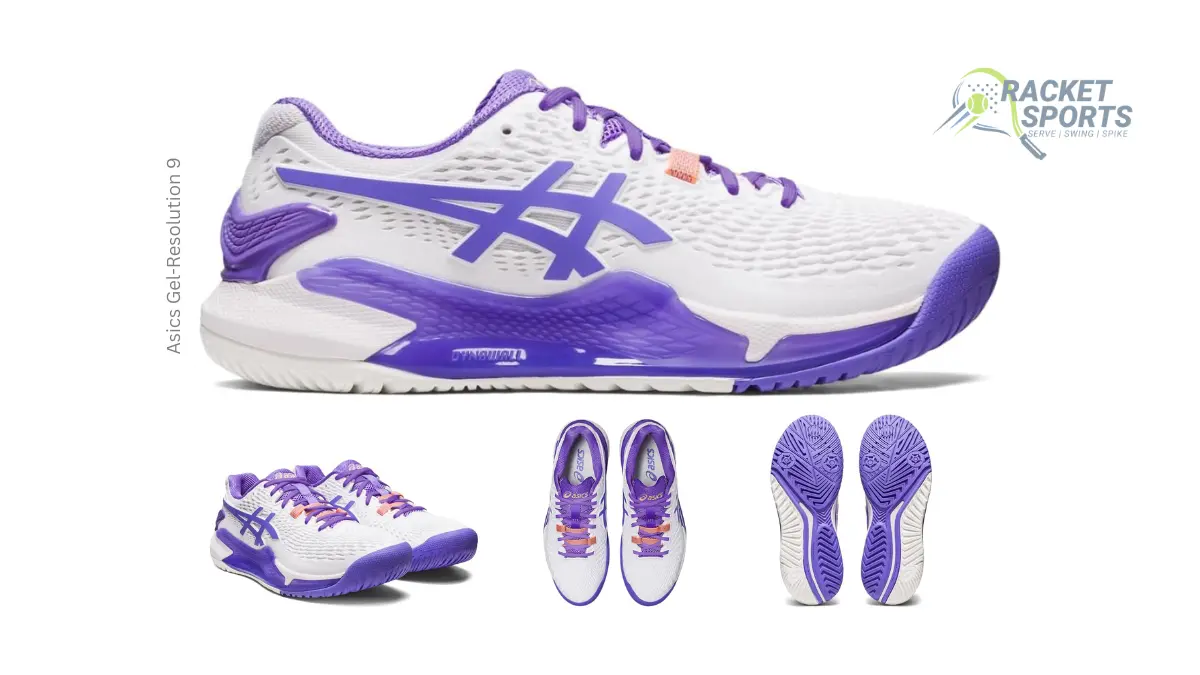
The Asics Gel Resolution 9 is the most recommended shoe for foot pain, and for good reason. Its signature Dynawall system wraps around the midfoot, locking the arch in place and preventing the shoe from folding or twisting under load. When testing these on court, I noticed that my foot felt supported during lateral movements, with zero arch strain when changing directions quickly.
The midfoot shank is incredibly rigid. You cannot twist the shoe with your hands, meaning your arch is shielded from folding under pressure. The rearfoot and forefoot Gel cushioning absorbs impact shock exceptionally well, reducing the sharp heel impact that triggers plantar pain on hard courts.
Asics Gel Resolution 9 Architecture:
+---------------------------------------------------+
| [Upper: PU Flexion Fit]                           |
|   +-------------------------------------------+   |
|   | [Midfoot: Dynawall Lateral TPU Wall]       |---|-> Prevents Lateral Roll & Arch Twist
|   +-------------------------------------------+   |
| [Midsole: FlyteFoam + Rearfoot Gel]               |
| [Outsole: AHAR+ Rubber]                           |
+---------------------------------------------------+
If you have wide feet, be sure to buy the 2E wide version, as the standard width can feel constricting and pinch the outer edge of your foot. The removable Ortholite insole makes it easy to slide in custom podiatrist orthotics if you need tailored arch support. The only drawbacks are the heavier weight profile and a short break-in period required for the upper material to soften.
- Arch Support: Excellent. The Dynawall extends from the midsole to the eyelets, providing a lockdown wrap.
- Heel Cushioning: Superior. The Gel pods disperse vertical impact energy horizontally.
- Outsole Durability: Outstanding. Backed by Asics' 6-month durability guarantee.
K-Swiss Hypercourt Supreme: The Cushion Champion
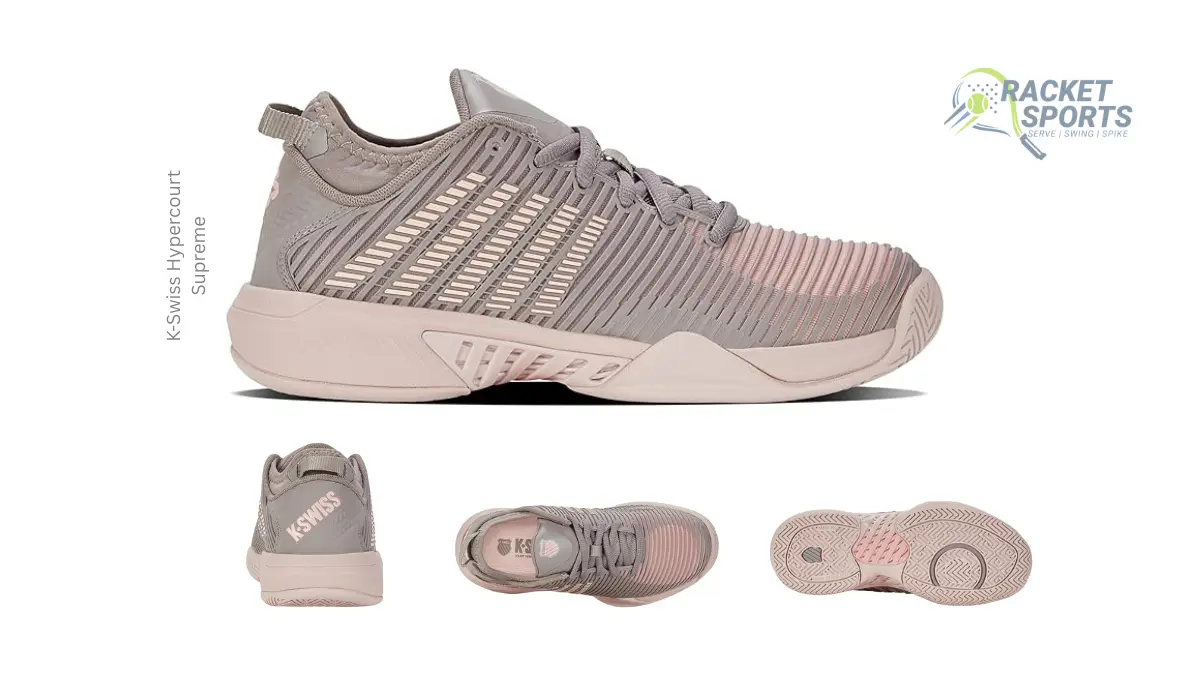
If you find the Asics Gel Resolution too stiff and heavy, the K-Swiss Hypercourt Supreme is a fantastic alternative. K-Swiss is famous for its plush comfort, and this model uses Surgelite foam in the midsole to deliver a soft, cloud-like ride. It feels softer out of the box than the Asics, cushioning your heel strikes like a running shoe while retaining a stable, low court profile.
It features a naturally wide toe box that allows your toes to splay naturally, reducing pressure on the forefoot and accommodating swelling during long matches. The upper mesh is flexible and breathable, which is ideal for hot summer days.
However, it lacks the rigid thermoplastic lateral side walls of the Asics. The internal EVA chassis provides moderate arch support, but it is not as rigid, making it better for players who prioritize cushion comfort over raw lateral stability. The outsole also wears down faster on abrasive concrete courts, and it does not come with a durability guarantee.
- Arch Support: Moderate. Suitable for players with flexible feet who don't like stiff plates.
- Heel Cushioning: Exceptional. The Surgelite foam is highly resilient and soft.
- Fit Profile: Generous width in the toe box and midfoot.
Yonex Power Cushion Eclipsion 5: The Impact Absorber
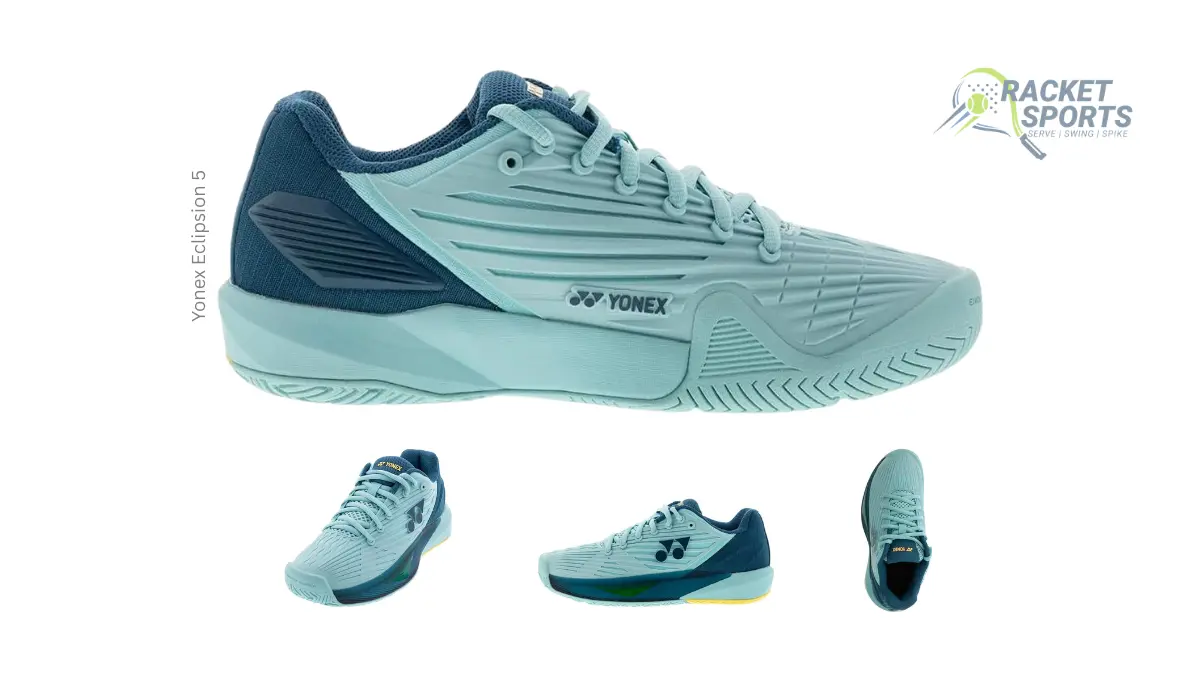
The Yonex Eclipsion 5 is the choice of ATP pros like Stan Wawrinka, designed for competitive players who move aggressively. It is built around Yonex's signature Power Cushion+ technology—a foam formulation that absorbs shock and converts it into kinetic energy. According to Yonex, a raw egg dropped from 12 meters onto a Power Cushion+ mat bounces back 6 meters without breaking.
During hard court playtests, landing from high kick serves felt incredibly soft on my heels. The shoe features a 3D Power Graphite Plate under the arch to prevent twisting, and a secure ankle collar that locks your heel into the back of the shoe. This prevents ankle pronation (rolling inward), which is a major contributor to arch strain and plantar fascia tension.
- Arch Support: Superior. The 3D Graphite Plate ensures maximum torsional rigidity.
- Heel Cushioning: High. Power Cushion+ absorbs the heaviest concrete impacts.
- Fit Profile: Snug, narrow-to-medium fit. If you have wide feet, you must size up or choose the Asics 2E.
The Eclipsion 5 is firm and highly stable, making it perfect for aggressive baseliners. The upper is made of Durable Skin Light, which is tough but requires some break-in time to flex comfortably.
4. Biomechanical Analysis: How to Prevent Arch Strain
When playing tennis, your feet are subjected to multi-directional forces. To prevent plantar fasciitis, you need to understand the biomechanical chain of your movement. When you sprint forward and slide to a stop, your foot undergoes rapid deceleration. If your shoe lacks a rigid shank, the arch flattens, stretching the plantar fascia tendon under tension. This stretching is compounded by pronation.
Pronation & Arch Strain Cycle:
+------------------------------------+
| Ankle Rolls Inward (Pronation)     |
+------------------------------------+
                  |
                  v
+------------------------------------+
| Arch Collapses & flattens          |
+------------------------------------+
                  |
                  v
+------------------------------------+
| Plantar Fascia Stretches & Tears   |
+------------------------------------+
                  |
                  v
+------------------------------------+
| Severe Heel Pain & Inflammation    |
+------------------------------------+
A rigid shank acts as a bridge, transferring the forces from the heel to the forefoot without allowing the middle of the shoe to collapse. This structural support is why running shoes, which are designed to flex in the middle, are unsuitable for tennis players suffering from plantar fasciitis. Tennis shoes also have a wider lateral outrigger (a flare on the outer edge of the outsole) to stabilize the foot during side-to-side movements, preventing ankle rolls.
To maximize your recovery, consider the following podiatrist-recommended court habits:
- Dynamic Calf Stretches: Stiff calves pull on the Achilles tendon, which directly increases tension on the plantar fascia. Stretch your calves for 5 minutes before entering the court.
- Gradual Warm-Up: Spend the first 10 minutes of your practice hitting light mini-tennis to warm up the foot ligaments before performing explosive sprints.
- Post-Match Recovery: Roll the arch of your foot over a frozen water bottle for 10 minutes after playing to reduce inflammation and massage the fascia.
- Timely Shoe Replacement: Replace your shoes every 45 to 60 hours of play. Even if the outsole looks intact, the internal midsole foam degrades and loses its shock-absorbing capacity.
5. Summary Verdict: Which Shoe Protects Your Foot?
- Choose the Asics Gel Resolution 9 (Wide 2E) if you want the stiffest, most stable arch support, play high-intensity matches, and require a shoe that accommodates custom orthotics while resisting wear.
- Choose the K-Swiss Hypercourt Supreme if you want a soft, plush feel with zero break-in period, a naturally wide toe box, and prefer responsive cushioning over rigid plastic plates.
- Choose the Yonex Eclipsion 5 if you suffer from severe heel bruising, want an exceptional ankle lock, and play an aggressive court game that demands maximum shock absorption and stability.
The Playtest Standings: Our Top Recommendations
Pros
- ✓Exceptional arch stability
- ✓Limits pronation and arch flex
- ✓Removable footbed for orthotics
Cons
- ✗Requires a break-in period
- ✗Heavy weight profile
"The absolute premier shoe for foot issues. The plastic Dynawall side panels and rigid under-arch shank prevent the shoe from twisting, protecting your arch from impact strain."
*RacketEdge is an Amazon Associate. We earn a commission on qualifying purchases.
K-Swiss Hypercourt Supreme
Pros
- ✓Soft, plush interior lining
- ✓Naturally wide toe box
- ✓Lightweight responsive cushioning
Cons
- ✗Outsole wears out faster
- ✗Mild lateral arch support
"A highly cushioned, comfortable shoe that requires zero break-in. Excellent for players who find stiff stability shoes too hard or constricting on their foot joints."
*RacketEdge is an Amazon Associate. We earn a commission on qualifying purchases.
Pros
- ✓Exceptional ankle collar support
- ✓Excellent shock absorption
- ✓Extremely durable toe guard
Cons
- ✗Snug, narrow fit profile
- ✗Firm upper material feel
"Designed for competitive players who move aggressively. The Eclipsion 5 uses Yonex's signature shock-absorbing foam, which bounces back and protects your heels from impact bruising."
*RacketEdge is an Amazon Associate. We earn a commission on qualifying purchases.
Frequently Asked Questions
Why does tennis cause plantar fasciitis pain?
Tennis involves explosive vertical jumps and horizontal slides on hard concrete. The impact forces can exceed three times your body weight, stretching and creating micro-tears in the plantar fascia tendon under your arch.
Should a shoe for plantar fasciitis be flexible or stiff?
The middle of the shoe (arch shank) must be completely rigid to prevent the foot from twisting or flexing in the middle. However, the forefoot must have a clean hinge line to allow for natural toe-off movement.
Are custom orthotics compatible with these tennis shoes?
Yes. All three recommended models feature removable stock insoles, allowing you to slide in your custom podiatrist orthotics or off-the-shelf arch support inserts.
How does ankle support link to plantar fasciitis?
If your ankle is unstable and rolls inward (pronation), it forces your arch to collapse on impact. This collapse stretches the plantar fascia, multiplying heel pain. Strong ankle collar support prevents this collapse.
Can I wear heel cups in tennis shoes?
Heel cups can help reduce direct bone bruising, but they often raise your heel too high inside the shoe, causing heel slippage. A structured tennis shoe with deep, built-in cushioning is a safer option.
Chris Davies
Chris Davies reviews, playtests, and strings tennis gear. His shootouts compare specifications under uniform conditions, providing intermediate and advanced players with verified court metrics.