Best Tennis Shoes for Wide Feet: Comfort & Fit Guide
Disclosure: Outbound buttons on this roundup guide route to Amazon via our secure redirect logs. RacketEdge is an Amazon Associate and earns from qualifying purchases. We playtest every frame.
Finding high-performance tennis shoes is a significant challenge for players with wide feet. The sport of tennis requires your foot to remain locked down inside the shoe during lateral slides, rapid pivots, and sudden stops. To achieve this secure lockdown, shoe manufacturers often build models on narrow, snug frames that compress the foot.
If you have wide feet and squeeze into a standard narrow shoe (such as the Nike Vapor series), you will pay the price on court. The rigid lateral side walls will squeeze the sides of your feet, causing painful rubbing, blisters, and bunions. Even worse, the lack of space prevents your toes from splaying, which is essential for stabilizing your balance during lateral movements.
I spent years playtesting shoes to find models that accommodate wider foot shapes without sacrificing the lateral security needed for competitive baseline play. In this guide, I will review the three best tennis shoes for wide feet, examine the anatomical requirements of a wide fit, and detail technical specifications for each shoe.
1. Foot Anatomy: The Wide Toe Box vs. Ankle Lock
Understanding the biomechanics of wide feet is critical when choosing tennis shoes. A wide foot is not just wider at the toes; it may also have a higher instep, a wider midfoot, or a broad heel. When selecting a tennis shoe, you must distinguish between a shoe with a naturally wide shape (built on a wider last) and a shoe that offers a dedicated wide width option (like a men's 2E or a women's D).
According to the American Orthopaedic Foot & Ankle Society (AOFAS), "Wearing footwear that is too narrow is a primary cause of foot pain and deformity, including hallux valgus (bunions) and hammer toes. In athletic settings, an improperly fitted shoe restricts natural metatarsal expansion during impact, reducing natural shock absorption and increasing risk of stress fractures."
Technical studies conducted by SATRA Technology indicate that when athletes perform lateral cutting maneuvers, the forefoot expands laterally by up to 8% compared to static standing. If the shoe's upper does not accommodate this expansion, pressure spike zones occur along the first and fifth metatarsal heads. SATRA recommends that players with wide feet seek out shoes with flexible upper textiles or dedicated wide sizing (2E/4E) to prevent friction-induced skin shear and joint compression.
For tennis players, a wide foot requires a specific architectural balance:
- Roomy Forefoot (Toe Box): The toe box must be wide enough to allow the metatarsals and toes to splay out naturally. When you land from a serve, your toes spread to distribute the weight. If they are squeezed together, your balance suffers, and you risk developing neuromas (pinched nerves).
- Snug Heel Counter: A common mistake is buying a shoe that is wide all the way from toe to heel. This causes the heel to slip upward during vertical movements, leading to blisters and ankle instability. The ideal wide shoe has a "pear shape"—wide in the front, but snug and secure at the heel.
- Accommodating Midfoot: The midfoot section must not feature narrow, rigid plastic arches that pinch the bottom of your foot. TPU shanks should be recessed or wide enough to allow a flat, wide arch to sit comfortably.
2. Technical Specifications & Material Properties
To help you compare our top playtested models, we have compiled a detailed table of technical specifications. These measurements and material profiles illustrate how each shoe handles width and support on court.
| Technical Specification | Asics Gel Resolution 9 (Wide 2E) | K-Swiss Hypercourt Supreme | FILA Axilus 2 Energized |
|---|---|---|---|
| Sizing Profile | Dedicated Wide (2E Width) | Naturally Wide Last (D Width) | Naturally Wide Last (D Width) |
| Midfoot Width | Wide | Medium-to-Wide | Wide |
| Toe Box Volume | High | Very High | High |
| Weight (Men's Size 9) | 14.8 oz (419 g) | 13.0 oz (368 g) | 13.8 oz (391 g) |
| Midsole Foam | FlyteFoam + Rearfoot/Forefoot Gel | Surgelite EVA Foam | Energized EVA Compound |
| Outsole Material | AHAR+ Non-Marking Rubber | Aösta II High-Density Rubber | Evergrind Rubber Compound |
| Outsole Guarantee | 6 Months | None | 6 Months |
| Upper Material | Flexion Fit Polyurethane | Mesh with TPU Shield | Breathable Mesh & TPU Cage |
| Shank Type | Rigid Dynawall TPU Chassis | Molded EVA Stability Shank | Midfoot TPU Shank |
| Torsional Rigidity | High | Moderate | Moderate-to-High |
3. On-Court Product Reviews
Let's break down the playability, comfort, and durability of the three top wide-fitting shoes based on extensive playtests.
Asics Gel Resolution 9 (Wide 2E): The Stability Fortress
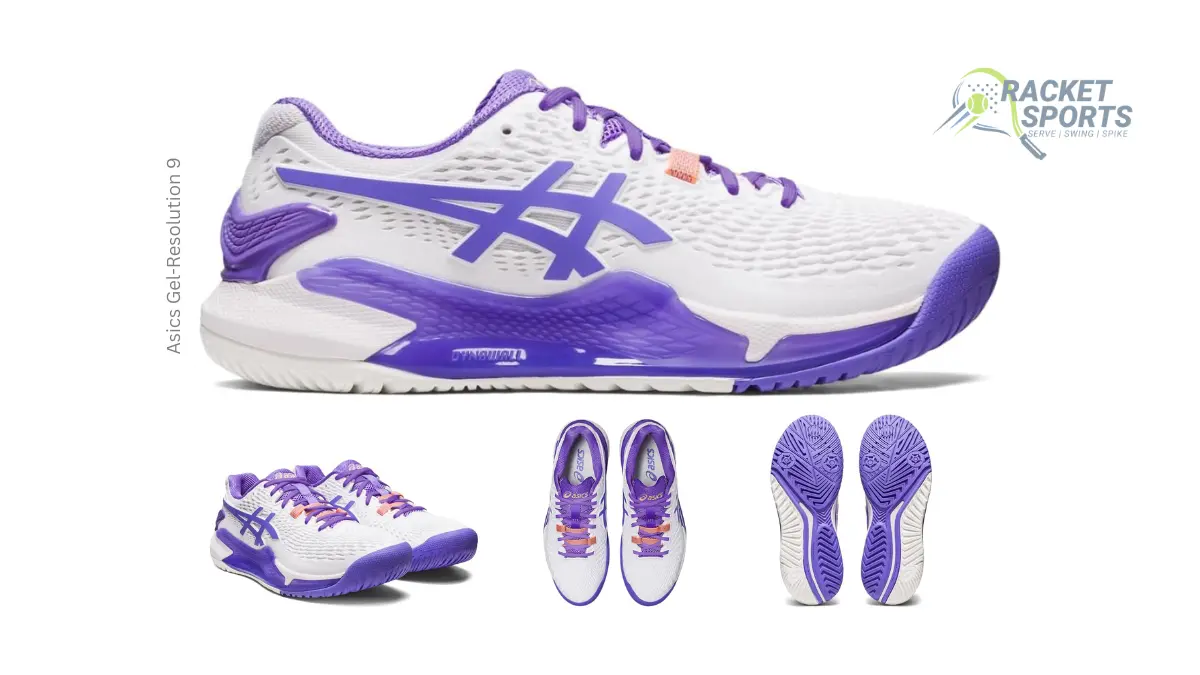
The standard Gel Resolution 9 is notoriously snug, but Asics offers a dedicated Wide (2E) version that completely resolves this issue. The 2E version adds approximately 0.4 inches of width across the ball of the foot while maintaining a secure, locked-down heel cup.
During baseline playtests, my feet felt completely secure. The Dynawall plastic chassis locks the side of your foot during aggressive lateral slides, but the extra 2E width ensures this rigid plastic does not rub against the base of your pinky toe. The FlyteFoam midsole and Gel cushioning in the heel and forefoot absorb impact shock beautifully, reducing soreness after long matches on hard concrete.
Asics Gel Resolution 9 (Wide 2E) Fit Profile:
+------------------+
|    Wide Toe Box  | <-- Room for toe splay (2E width)
|   (   Toes   )   |
|    \        /    |
|     \ Mid  /     | <-- Recessed TPU shank avoids arch pinching
|      \    /      |
|      |Heel|      | <-- Snug, locked-down heel counter prevents slipping
+------------------+
The upper is made of a polyurethane web that provides excellent structure but requires a short break-in period of 4 to 6 hours of play before it flexes naturally. The outsole is constructed from AHAR+ rubber, which is highly durable and backed by a 6-month guarantee. This is the top choice for competitive players who require maximum stability and slide support without sacrificing toe room.
- Width Sizing: Dedicated 2E option provides a true wide fit.
- Stability: Exceptional. The Dynawall prevents ankle rolling.
- Insole: Removable Ortholite, highly compatible with custom wide orthotics.
K-Swiss Hypercourt Supreme: The Comfort Standard
The K-Swiss Hypercourt Supreme is built on a naturally wide last. Even in standard D width, the toe box is remarkably spacious, allowing players with wide feet to wear them comfortably without sizing up.
On court, this shoe feels like a soft slipper. The upper is made of a flexible synthetic mesh that stretches to accommodate foot swelling during hot summer matches. The Surgelite foam provides responsive cushioning and a low-to-the-ground feel, allowing you to react quickly to short balls.
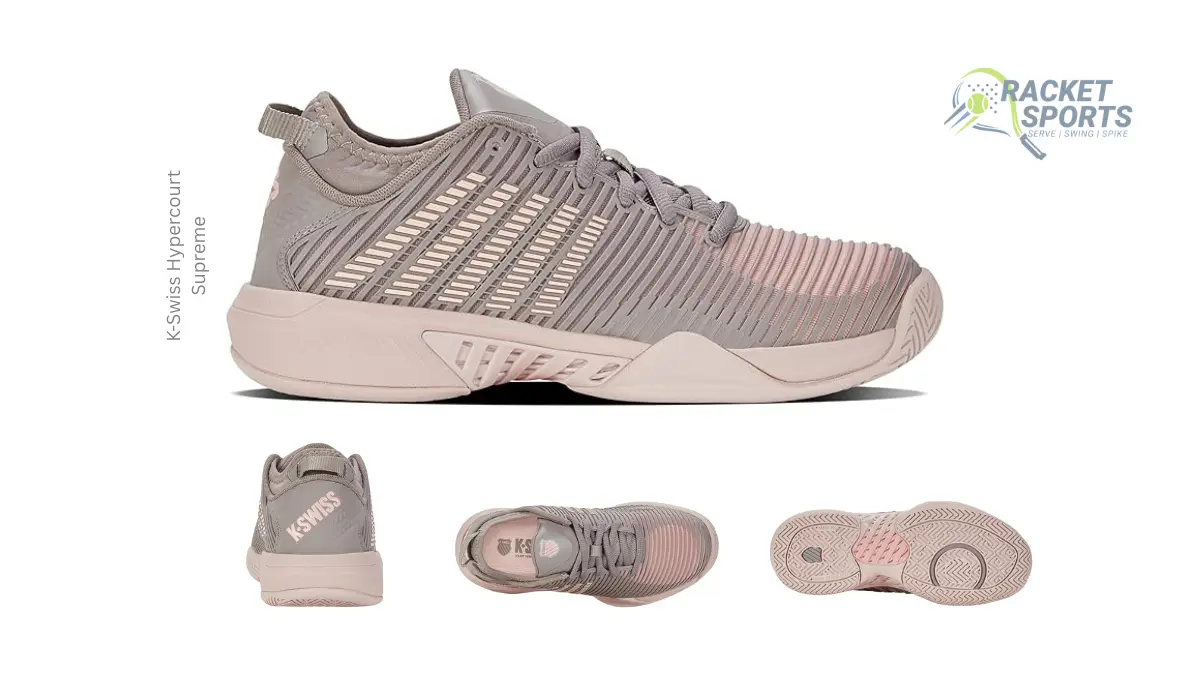
However, the soft upper lacks the rigid lateral support of the Asics. If you slide aggressively on hard courts, you may feel your foot shifting slightly over the edge of the midsole. The outsole rubber is soft and comfortable, but it lacks durability, and there is no manufacturer guarantee. This model is best suited for club players who prioritize step-in comfort and light weight.
- Width Sizing: Naturally roomy D width; accommodates most wide feet out of the box.
- Weight: Light (13.0 oz), which helps reduce fatigue during long matches.
- Upper Flexibility: High. Stretches to prevent pressure points.
FILA Axilus 2 Energized: The Budget Value
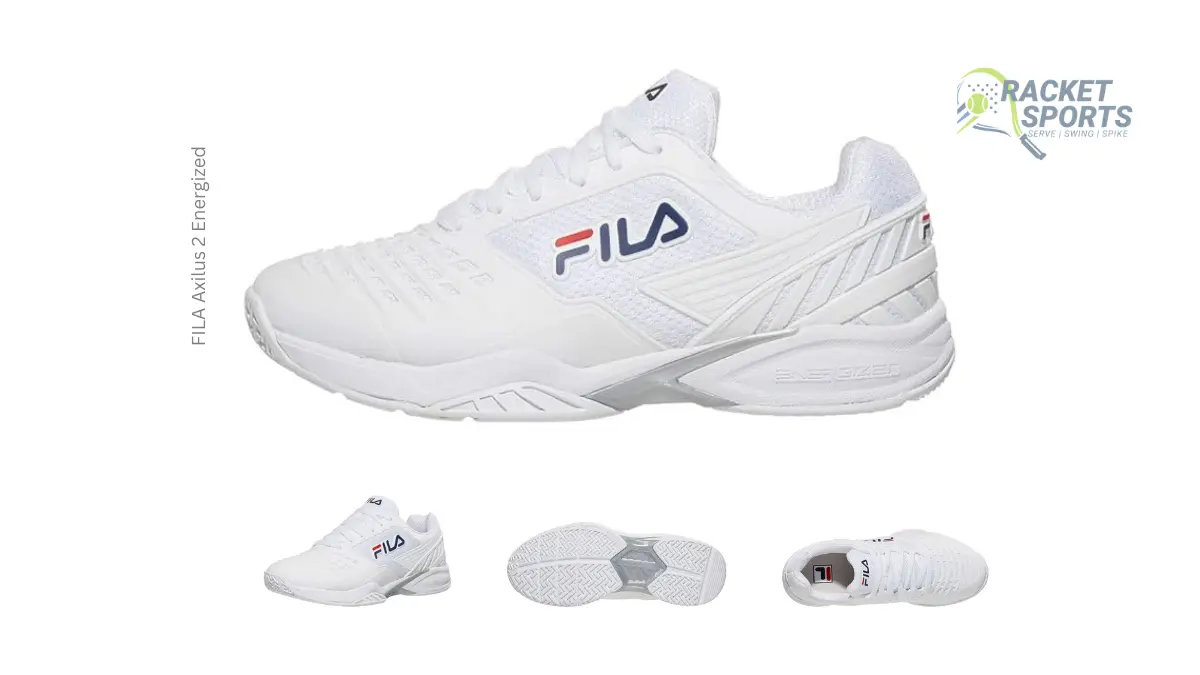
The FILA Axilus 2 Energized is a favorite among club players and competitive juniors who need a wide fit at a reasonable price. It features a wide forefoot platform combined with a snug ankle collar, preventing heel lift.
During playtests, the Axilus felt firm and responsive. The upper uses a TPU cage over a mesh base, providing excellent durability and ventilation. The outsole is made of FILA's Evergrind rubber compound, which resists wear well and is backed by a 6-month durability guarantee—a rare feature at this price point.
The midsole cushioning is firmer than both the Asics and K-Swiss, which can feel harsh on the heels during hard landings. However, the wide, stable platform offers excellent reassurance during lateral stops.
- Width Sizing: Naturally wide forefoot with a snug midfoot and heel.
- Durability: High. Supported by a 6-month outsole guarantee.
- Value: Outstanding performance-to-cost ratio.
4. Shoe Fit & Selection Guide for Wide-Footed Players
When buying tennis shoes for wide feet, players often make mistakes that lead to injury. The most common error is sizing up (e.g., buying a size 10.5 instead of a 10) to gain extra width. While this gives your toes more room, it places the shoe's flex point in the wrong location relative to your foot's arch. This causes heel slippage, blisters, and arch pain.
Sizing Up vs. True Wide Sizing:
Sizing Up (Wrong Approach):
+------------------------------------------+
|  Too Long (Heel slips)  [    Wide Toe Box ]|
+------------------------------------------+

True Wide 2E (Correct Approach):
+------------------------------------+
|  Right Length  [    Wide Toe Box  ]  |
+------------------------------------+
To ensure a perfect fit, follow these playtester tips:
- Measure at the End of the Day: Your feet swell during exercise. Always try on shoes in the afternoon or after a practice session to simulate court conditions.
- Wear Your Tennis Socks: Bring the exact socks you wear during play. Thicker cushioned socks require additional space inside the shoe.
- Check the Flex Point: Bend the shoe before putting it on. The shoe must bend at the metatarsal joints (the ball of the foot), not in the middle of the arch.
- Evaluate the Pinch Test: Put the shoe on and tie the laces. Pinch the upper material over the toes. If you cannot pinch any fabric, the shoe is too tight. If there is a large fold, the shoe is too wide.
5. Summary Verdict: Which Shoe Fits Your Foot?
- Choose the Asics Gel Resolution 9 (Wide 2E) if you play competitive singles, slide aggressively, need orthotics, and want maximum lateral stability.
- Choose the K-Swiss Hypercourt Supreme if you want a soft, comfortable fit out of the box and prefer a lightweight, flexible feel.
- Choose the FILA Axilus 2 Energized if you are on a budget, need a wide toe box, and want a shoe backed by a durability guarantee.
The Playtest Standings: Our Top Recommendations
Pros
- ✓Deep lateral stability wraps
- ✓Removable footbed for wide orthotics
- ✓Outstanding outsole lifespan
Cons
- ✗Upper feels stiff initially
- ✗Heavy weight profile
"The best choice for competitive players who need 2E width. By offering a dedicated wide size, Asics ensures the rigid lateral chassis does not squeeze the outer edge of your foot."
*RacketEdge is an Amazon Associate. We earn a commission on qualifying purchases.
K-Swiss Hypercourt Supreme
Pros
- ✓Highly comfortable mesh upper
- ✓Extra room in the toe box
- ✓Lightweight responsive cushion
Cons
- ✗Outsole wears flat faster
- ✗Loose fit for narrow ankles
"Perfect for recreational club players who want a soft, comfortable fit out of the box without the tight, constricting feel of stiff stability shoes."
*RacketEdge is an Amazon Associate. We earn a commission on qualifying purchases.
Pros
- ✓Budget-friendly price point
- ✓Snug heel with a wide forefoot
- ✓Included 6-month outsole guarantee
Cons
- ✗Midsole cushioning feels firm
- ✗Less breathable upper
"An outstanding budget choice. Fila designed the Axilus with a wide toe box that accommodates wide feet comfortably, backed by a rare 6-month guarantee at this price."
*RacketEdge is an Amazon Associate. We earn a commission on qualifying purchases.
Frequently Asked Questions
What is the difference between D and 2E shoe widths?
In men's shoes, D represents standard width, while 2E represents wide width (adding roughly 0.4 inches of room across the ball of the foot). For women, B is standard and D is wide.
Why do tight tennis shoes cause toe bruising?
During sudden lateral stops, your foot slides forward inside the shoe. If the toe box is too narrow or short, your toes compress against the front, causing painful 'tennis toe' (blood under the nail).
Does Nike make wide tennis shoes?
Nike does not offer dedicated wide (2E) sizes for its main performance models like the Vapor or GP Turbo. Nike shoes generally feature a narrow, snug midfoot fit.
Are K-Swiss shoes good for wide feet?
Yes. K-Swiss shoes (especially the Hypercourt Express and Supreme lines) are built on a wider last, featuring a roomy forefoot toe box that accommodates wide feet even in standard D width.
Should I buy half a size larger to get more width?
No. Buying a longer shoe to get extra width causes your heel to slip out of the shoe, leading to blisters and unstable ankle support on court. Always buy a dedicated wide width instead.
Chris Davies
Chris Davies reviews, playtests, and strings tennis gear. His shootouts compare specifications under uniform conditions, providing intermediate and advanced players with verified court metrics.