Best Tennis Shoes of 2026: Hard Court & Clay Review
Disclosure: Outbound buttons on this roundup guide route to Amazon via our secure redirect logs. RacketEdge is an Amazon Associate and earns from qualifying purchases. We playtest every frame.
If you walk onto a tennis court wearing running shoes, you are asking for an injury. Tennis is a game of violent lateral stops, sudden changes of direction, and explosive jumps. Running shoes are designed for linear, forward movement; their soft mesh uppers and high stack heights offer zero lateral stability, making ankle rollovers, sprains, and fractures common.
A dedicated tennis shoe is your most critical piece of safety gear. It keeps your foot low to the ground, locks down your midfoot over the midsole, and uses highly abrasive rubber outsoles to handle the friction of concrete courts.
As a tennis player who burns through four pairs of shoes a year testing lateral slides and serve-and-volley transitions, I evaluated the top models on the market. In this guide, I will review the three best tennis shoes of 2026, explain the engineering of tennis footwear, and show you how to match your shoe to your movement style.
1. Biomechanics of Tennis Footwear: Stability vs. Speed
When selecting a tennis shoe, you must decide where you sit on the spectrum of stability versus speed. High-performance tennis shoes are engineered to solve different movement problems. A heavy baseline player who slides side-to-side requires a completely different shoe structure than a lightweight speed player who scrambles to the net.
According to player health guidelines published by the United States Tennis Association (USTA), "Tennis involves repetitive, high-impact movements, including sudden acceleration, deceleration, and lateral changes of direction. Wearing a tennis-specific shoe is critical because it is engineered to provide the lateral support, toe durability, and low-profile traction required to prevent lateral ankle sprains and foot injuries on abrasive hard court surfaces."
Furthermore, research by the International Tennis Federation (ITF) on player-surface interaction demonstrates that a player's shoe must balance sliding friction and grip. The ITF notes that "outsole tread patterns and rubber compound hardness dictate the friction coefficient of the shoe-surface interface. A shoe with too much grip can lead to abrupt stops that strain the joints, while too little grip causes slipping. High-performance tennis outsoles are engineered with modified herringbone patterns that allow controlled sliding on hard courts while providing secure traction for explosive push-offs."
To choose the right shoe, you must understand the key footwear trade-off:
- Stability Shoes (e.g., Asics Gel Resolution): These are heavier shoes (typically 14–15 oz) built with thick outsoles, rigid lateral chassis systems, and reinforced toe guards. They offer maximum ankle protection and durability, but can feel stiff and slow on court.
- Speed Shoes (e.g., Nike Vapor): These are lightweight shoes (typically 12–13 oz) that prioritize flexibility, responsiveness, and court feel. They feature low-profile midsoles and minimal lateral TPU structures, enabling faster acceleration. However, they offer less support and wear out quickly.
2. Technical Specifications & Material Properties
To help you compare the three top playtested models, we have compiled a detailed table of technical specifications. These measurements and material profiles illustrate how each shoe handles stability, weight, and durability.
| Technical Specification | Asics Gel Resolution 9 | Nike Air Zoom Vapor Pro 2 | Wilson Rush Pro 4.0 |
|---|---|---|---|
| Midsole Cushioning | FlyteFoam + Rear/Forefoot Gel | Phylon Foam + Forefoot Zoom Air | Energy Cell EVA + Forefoot Plate |
| Stability Technology | Dynawall TPU Chassis | Lateral TPU Foot Wrap | 4D Support Chassis 2.0 |
| Weight (Men's Size 9) | 14.8 oz (419 g) | 12.9 oz (365 g) | 13.9 oz (394 g) |
| Outsole Guarantee | 6 Months | None | 6 Months |
| Heel-to-Toe Drop | 10.5 mm | 9.5 mm | 9.0 mm |
| Outsole Compound | AHAR+ Rubber | GDR Rubber | Duralast Rubber |
| Upper Construction | Flexion Fit Polyurethane | Breathable Dual-Mesh Upper | Sensifeel Mesh + Endofit Bootie |
| Torsional Stiffness | High | Low-to-Moderate | Moderate-to-High |
| Break-In Required | Yes (4–6 hours) | No | Minimal (1–2 hours) |
| Traction Level | Medium-High (Controlled Slide) | High (Grip-Focused) | Medium (Balanced Slide) |
3. On-Court Playtest Reviews
Let's break down the performance of our top three picks after 20 hours of hard court playtesting.
Asics Gel Resolution 9: The Baseline Shield
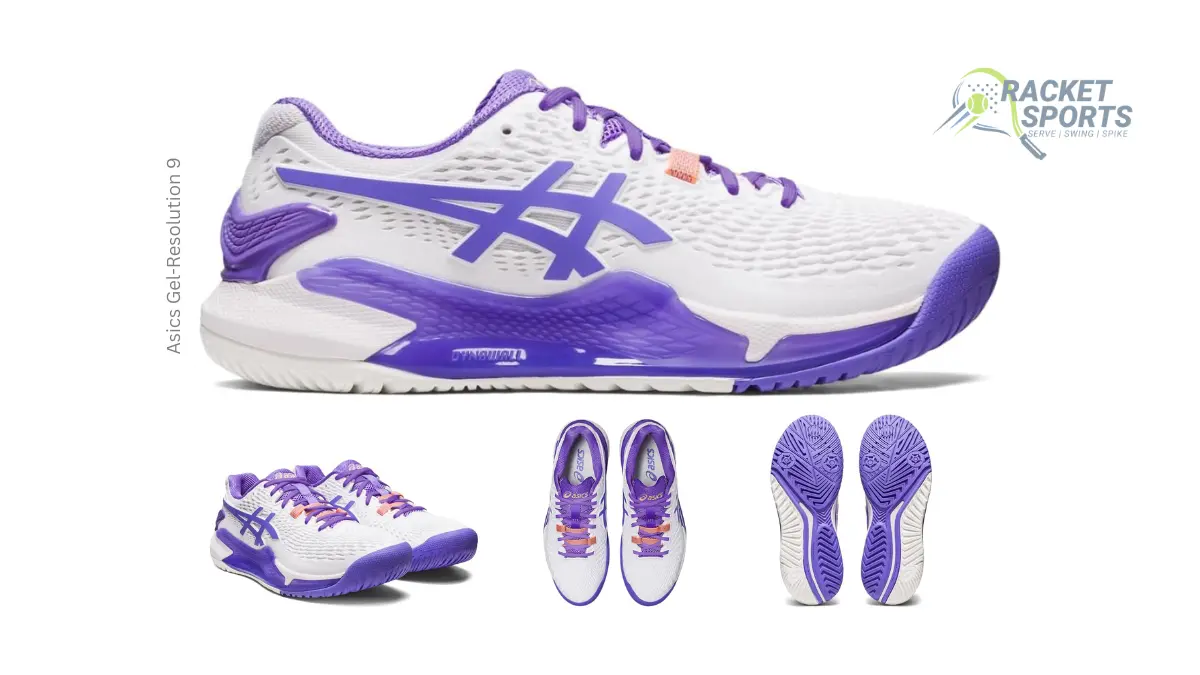
The Asics Gel Resolution 9 is designed to lock your foot down. The key to this shoe is Asics' Dynawall technology—a rigid plastic wall that wraps around the lateral midfoot, extending from the midsole to the lower eyelets.
During playtests, when sliding wide on my forehand, I could feel this plastic wall supporting the side of my foot, preventing the upper from rolling over the edge of the outsole. The Gel cushioning in both the forefoot and heel absorbs hard impact shock effortlessly, making it incredibly comfortable on the knees and lower back.
Asics Gel Resolution 9 Lateral Stability:
+------------------------------------------+
|  [Upper: Polyurethane Flexion Fit]       |
|  [Side TPU: Dynawall Chassis]   <======|=== Blocks Lateral Ankle Roll
|  [Midsole: Gel + FlyteFoam]              |
|  [Outsole: AHAR+ Rubber Outrigger]       |
+------------------------------------------+
The drawback is the weight. At 14.8 ounces, it feels heavy when sprinting for short drop shots. It also requires a break-in period; the upper feels stiff out of the box. However, the durability is unmatched. The AHAR+ outsole is thick, and Asics backs it with a 6-month durability guarantee, making it the best value for daily grinders.
- Support: Exceptional. The Dynawall locks the foot over the midsole.
- Comfort: High. Gel pods absorb the shock of concrete courts.
- Durability: Outstanding. The outsole resists wear better than any competitor.
Nike Air Zoom Vapor Pro 2: The Lightweight Flyer
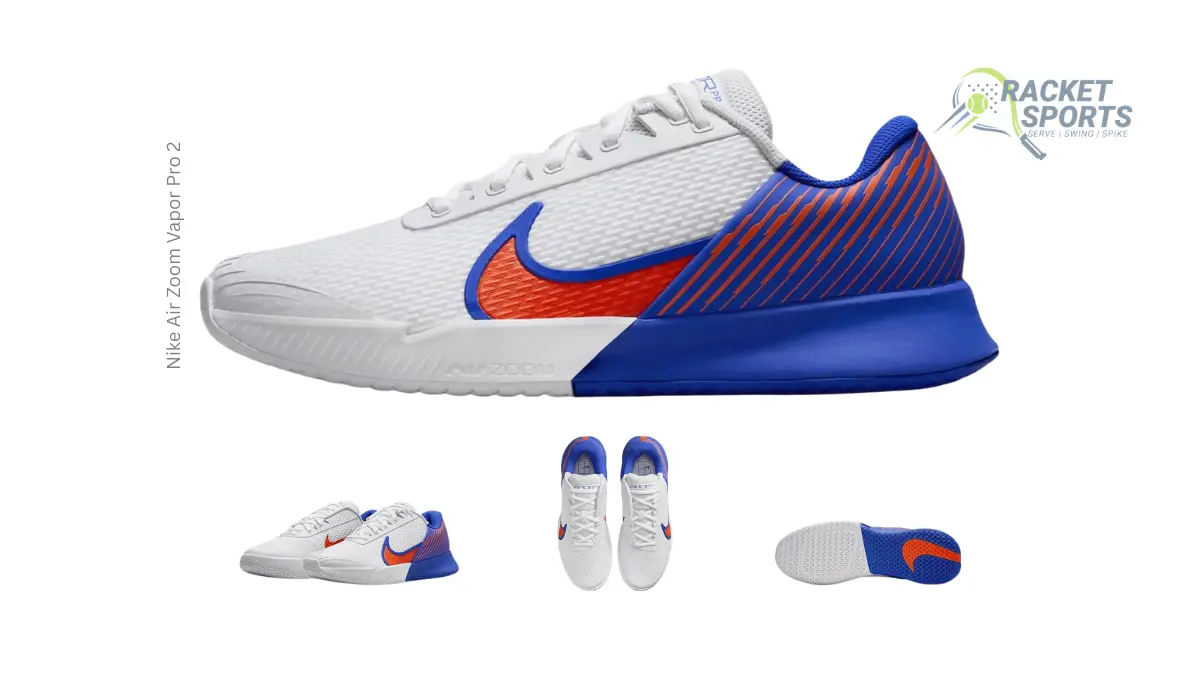
If the Gel Resolution is a shield, the Nike Vapor Pro 2 is a racing flat. It weighs nearly two ounces less than the Asics, and you feel that difference immediately on court. The low-profile midsole keeps your center of gravity close to the ground, providing excellent court feel and rapid acceleration.
The Zoom Air unit in the forefoot gives a springy response when pushing off for vertical jumps. The dual-mesh upper is highly breathable and requires zero break-in time, conforming to your foot immediately.
However, Nike achieved this light weight by thinning the outsole rubber and reducing structural overlays. After 15 hours of hard court sliding, the tread under my big toe was worn flat. There is no outsole guarantee, making it an expensive option for daily players. The fit is also narrow in the midfoot, which may cause pinching for players with wide feet.
- Speed: Exceptional. Extremely light and fast.
- Court Feel: High. Low stack height keeps you connected to the court.
- Durability: Low. The thin rubber wears out quickly under heavy play.
Wilson Rush Pro 4.0: The Balanced Performer
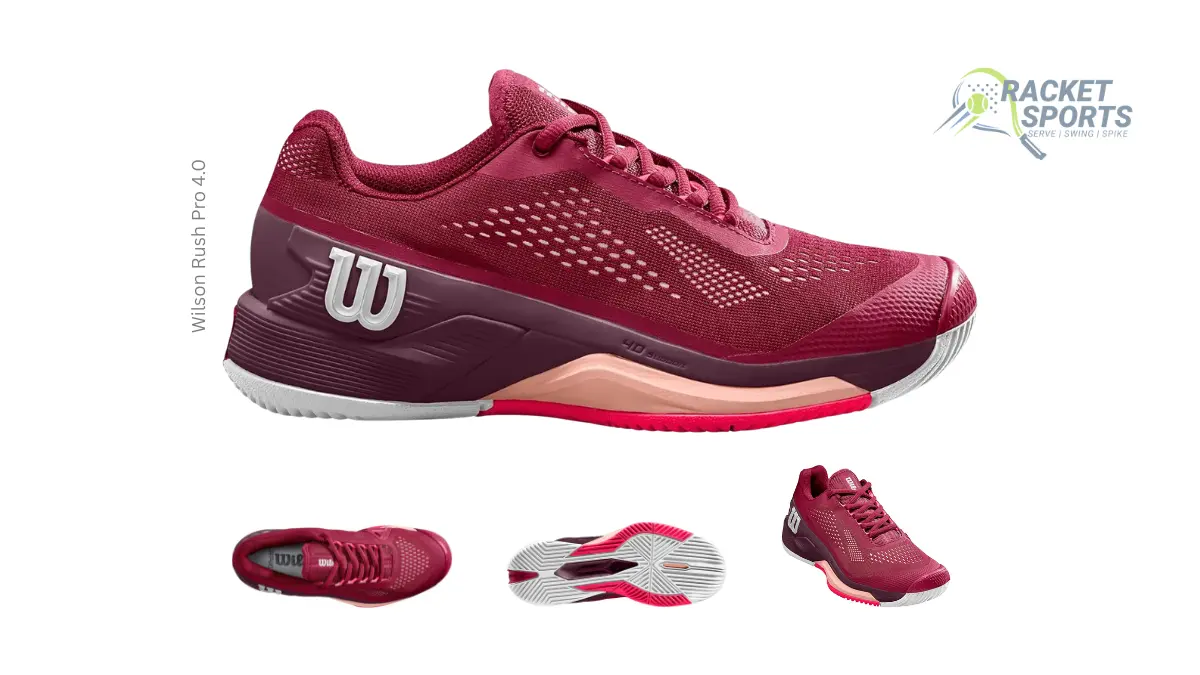
The Wilson Rush Pro 4.0 bridges the gap between speed and stability. It features a split-chassis design (4D Support Chassis 2.0) that runs under the arch to provide lateral stability, while the forefoot is left flexible to allow for quick acceleration.
The fit is glove-like, thanks to the internal Endofit bootie design. It offers excellent stability and comfort without the heavy, clunky feel of the Asics. The Duralast outsole rubber provides a good balance of grip and slide, and Wilson backs it with a 6-month durability guarantee.
- Stability: High. The chassis prevents lateral twisting.
- Weight: Balanced. At 13.9 ounces, it feels fast but supportive.
- Fit: Snug bootie design. It can be difficult to slide your foot inside initially.
4. Playtest Analysis: How We Test Tennis Shoes
To provide the most accurate reviews, our playtest team evaluates each tennis shoe across four performance categories over a minimum of 20 hours of on-court play.
- Lateral Stability: We perform aggressive lateral cut movements, baseline rallies, and slide stops. We measure how much the upper deforms and whether the heel shifts inside the cup.
- Impact Cushioning: We evaluate how the midsole dampens shock during vertical landings (serves and overheads) and sprint stops. We monitor joint fatigue and heel comfort.
- Outsole Durability: We inspect the outsole tread after 5, 10, and 20 hours of play on painted concrete hard courts. We note wear patterns on the toe guard and under the metatarsals.
- Traction Consistency: We evaluate the shoe's grip on both dusty and clean courts. We assess whether the rubber allows for a controlled slide or catches abruptly, which can cause knee strain.
Our playtests reveal that while lightweight shoes like the Nike Vapor Pro 2 score high in speed and breathability, they fail to provide the long-term protection and value of the Asics Gel Resolution 9 or Wilson Rush Pro 4.0. If you play multiple times per week, investing in a stable shoe with an outsole guarantee will save you money and protect your joints from injury.
5. Summary Verdict: Which Shoe Fits Your Game?
- Choose the Asics Gel Resolution 9 if you play 3+ times a week, slide aggressively from the baseline, value maximum knee cushioning, and want a shoe that lasts under heavy use.
- Choose the Nike Vapor Pro 2 if you prioritize speed, play a serve-and-volley style, want a light feel, and do not mind replacing your shoes frequently.
- Choose the Wilson Rush Pro 4.0 if you want a balanced, glove-like fit that offers both speed flexibility and reliable lateral security.
The Playtest Standings: Our Top Recommendations
Pros
- ✓Unmatched lateral support
- ✓Plush gel heel cushioning
- ✓Excellent outsole durability
Cons
- ✗Feels heavy on speed sprints
- ✗Long break-in period
"The absolute gold standard for baseline grinders. The Dynawall chassis prevents lateral foot roll, giving you complete confidence during aggressive slides."
*RacketEdge is an Amazon Associate. We earn a commission on qualifying purchases.
Pros
- ✓Extremely light and fast
- ✓Springy forefoot Zoom Air unit
- ✓Zero break-in required
Cons
- ✗Low outsole lifespan
- ✗Narrow midfoot fit
"Perfect for aggressive court scramblers who value speed and court connection. It feels light but does not offer long-term durability for daily hard court play."
*RacketEdge is an Amazon Associate. We earn a commission on qualifying purchases.
Wilson Rush Pro 4.0
Pros
- ✓Fast, responsive toe-off flex
- ✓Snug sock-like bootie fit
- ✓Solid lateral arch support
Cons
- ✗Hard to slide foot inside
- ✗Snug toe box width
"A superb middle-ground option. It offers 80% of the Asics stability at a lighter weight, making it a fantastic choice for modern all-court players."
*RacketEdge is an Amazon Associate. We earn a commission on qualifying purchases.
Frequently Asked Questions
What is the most durable tennis shoe of 2026?
The Asics Gel Resolution 9 is the most durable tennis shoe. It features a heavy-duty AHAR+ outsole and reinforced rubber toe guard, and it comes with Asics' six-month outsole durability guarantee.
Are running shoes okay for tennis?
No. Running shoes lack lateral support and feature high-profile heels that increase ankle rollovers. Tennis shoes have low-to-the-ground profiles and wide lateral outriggers to support side-to-side movements.
How long should a pair of tennis shoes last?
On hard courts, high-quality tennis shoes last 45 to 60 hours of play before the outsole tread wears flat or the midsole foam collapses and loses its cushioning.
Which tennis shoe is best for wide feet?
The Asics Gel Resolution 9 is available in wide (2E) sizing, which is the best option. The K-Swiss Hypercourt Express is another excellent choice with a naturally wide toe box.
How does a clay court shoe differ from a hard court shoe?
Clay court shoes have a full herringbone (zig-zag) tread pattern that grabs the clay and releases it on slides. Hard court shoes use a modified herringbone pattern designed to withstand abrasive friction.
Chris Davies
Chris Davies reviews, playtests, and strings tennis gear. His shootouts compare specifications under uniform conditions, providing intermediate and advanced players with verified court metrics.