Best Tennis Strings 2026: The Ultimate Guide
Disclosure: Outbound buttons on this roundup guide route to Amazon via our secure redirect logs. RacketEdge is an Amazon Associate and earns from qualifying purchases. We playtest every frame.
When shopping for tennis gear, players spend hours debating racket specifications. They analyze head sizes, static weights, and stiffness ratings. But there is a secret known to professional stringers: the frame is just a shell; the strings are the engine. If you are trying to find the best tennis strings 2026 has to offer to elevate your game, increase comfort, or unlock massive topspin, this playtest-backed guide is for you.
Your strings account for 50% of your racket's total playability. If you string a high-performance $250 racket with cheap, dead strings, it will perform like a department store model. Conversely, stringing a budget racket with a premium string can transform its feel, control, and comfort.
I spent over a decade playtesting strings on court, running them through dynamic tension tests, and evaluating how different materials affect arm fatigue. In this guide, I will review the best tennis strings of 2026, break down the differences between polyester, multifilament, and natural gut, and help you find the correct string setup for your NTRP skill level.
1. The Three Primary String Materials
Before choosing a string, you must understand the three categories of string materials:
- Co-Polyester (Monofilament): Polyester is a single plastic strand. Because it is rigid, it creates a firm string bed that returns less energy to the ball. This low power allows advanced players to swing at full speed with complete confidence. Additionally, polyesters have a slick coating that allows the main strings to slide and snap back, generating heavy topspin.
- Multifilament (Nylon): Multifilament strings consist of thousands of individual micro-fibers woven together and coated in a protective sheath. They behave like natural gut, flexing deeply on impact to absorb vibration. They are the ideal choice for beginners, seniors, and players suffering from forearm fatigue.
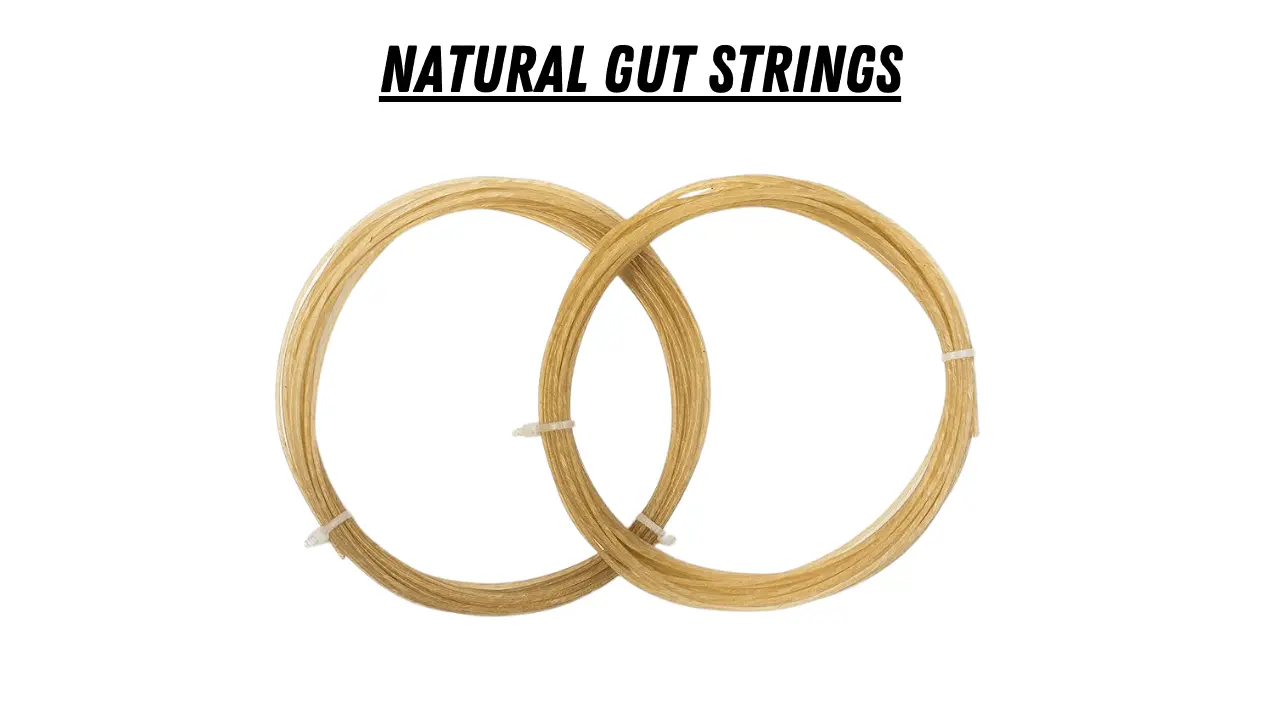
- Natural Gut: The gold standard of tennis strings. Made from cow intestines, natural gut is highly elastic. It pockets the ball, providing unmatched feel, touch, and comfort. It also retains its tension better than any synthetic string. The only drawback is its high price ($45+ per set) and sensitivity to water.
2. Technical Guide: String Tension and Gauge
To unlock the performance of your strings, you must understand the two primary variables: Tension and Gauge.
String Tension: Control vs. Power
String tension is measured in pounds (lbs) or kilograms (kg). The tension determines how much the string bed deflects on ball contact:
- Lower Tension (45 to 52 lbs): Opens up the string bed, allowing the strings to flex and stretch. This produces a "trampoline effect" that increases depth (power), sweet spot size, and comfort.
- Higher Tension (55 to 62 lbs): Restricts string movement, creating a rigid hitting surface. This returns less energy to the ball, giving you superior directional control and a lower launch angle.
Modern stringing trends have shifted significantly lower. Even professional players who swing at maximum speeds now string co-polyester strings in the high 40s or low 50s to reduce impact shock on their joints.
String Gauge: Durability vs. Playability
Gauge refers to the thickness of the string. Thin strings bite the ball better and feel softer, while thick strings last longer:
| Gauge Number | Diameter (mm) | Playability Feel | Durability Level | Spin Potential |
|---|---|---|---|---|
| 15 / 15L | 1.35 - 1.40mm | Firm & Muted | Maximum / Long-lasting | Low |
| 16 | 1.30mm | Balanced | High / Standard | Medium |
| 17 | 1.25mm | Soft & Responsive | Moderate | High |
| 18 | 1.15 - 1.20mm | Ultra-Plush | Low / Shears quickly | Maximum |
3. Hybrid Stringing: The Best of Both Worlds
If you want the spin and control of a polyester string but find a full bed too stiff, hybrid stringing is the solution. This setup involves stringing the vertical main strings with one type of string, and the horizontal cross strings with another:
- Poly Mains / Nylon Crosses (The Spin & Comfort Hybrid): This is the most common hybrid. The polyester mains slide and snap back to generate topspin, while the soft multifilament crosses cushion the string bed, absorbing vibrations and increasing arm comfort.
- Natural Gut Mains / Poly Crosses (The Federer Setup): Popularized by Roger Federer, this setup places natural gut in the mains to maximize feel, ball pocketing, and power, while using stiff polyester crosses to control the launch angle and add spin bite.
4. Playtest Reviews: Top Tennis Strings
Luxilon ALU Power: The Control Benchmark
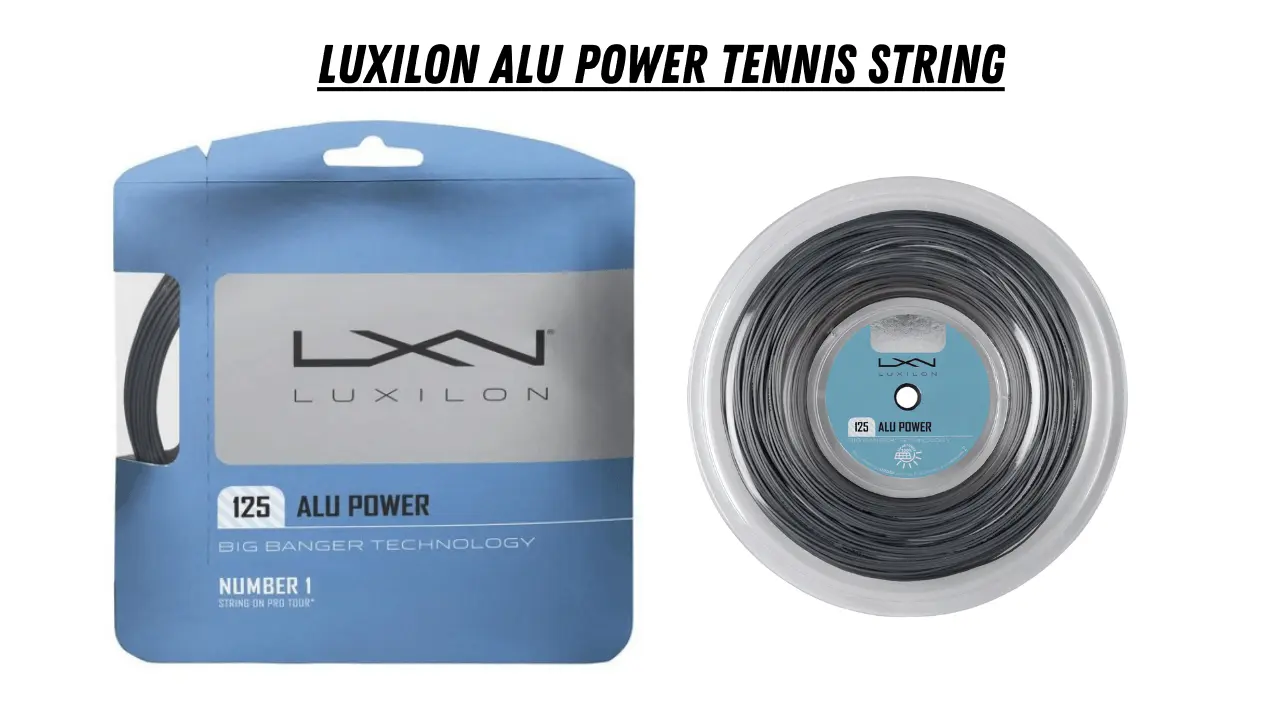
If you watch tennis on television, you are looking at Luxilon ALU Power. It is the most popular string on the ATP and WTA tours.
When playtesting ALU Power, the control is immediate. I could swing at full speed on my forehand wing, targeting lines with confidence. The ball pocketing feel is crisp and metallic. However, it is a demanding string. If you hit off-center, the impact feel is harsh, and it loses its playability after 10 hours of play.
Babolat RPM Blast: The Spin Machine
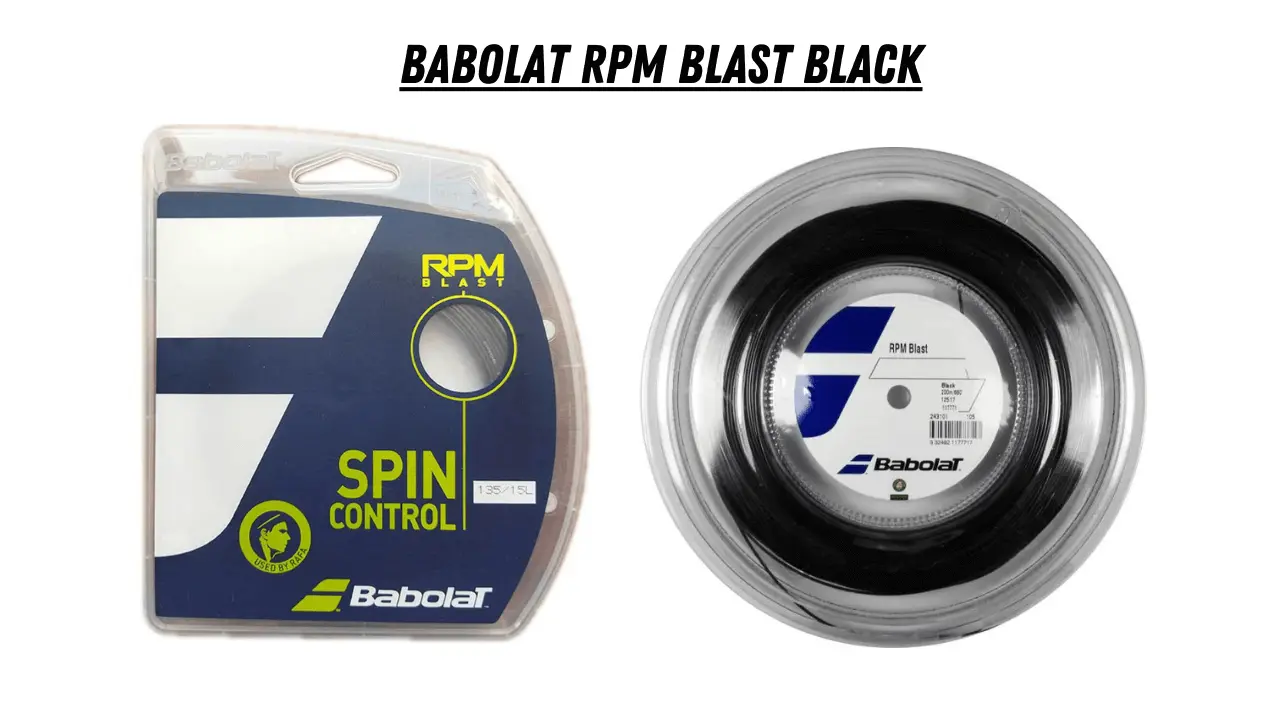
Made famous by Rafael Nadal, RPM Blast features an octagonal profile and a slick silicone coating.
On court, this string generates heavy, dipping topspin. When trading baseline groundstrokes, I could feel the octagonal edges grab the ball, clearing the net with safe margin before diving sharply. It is stiffer than ALU Power, meaning players with sensitive elbows should avoid stringing it above 50 pounds.
Tecnifibre NRG2: The Comfort King
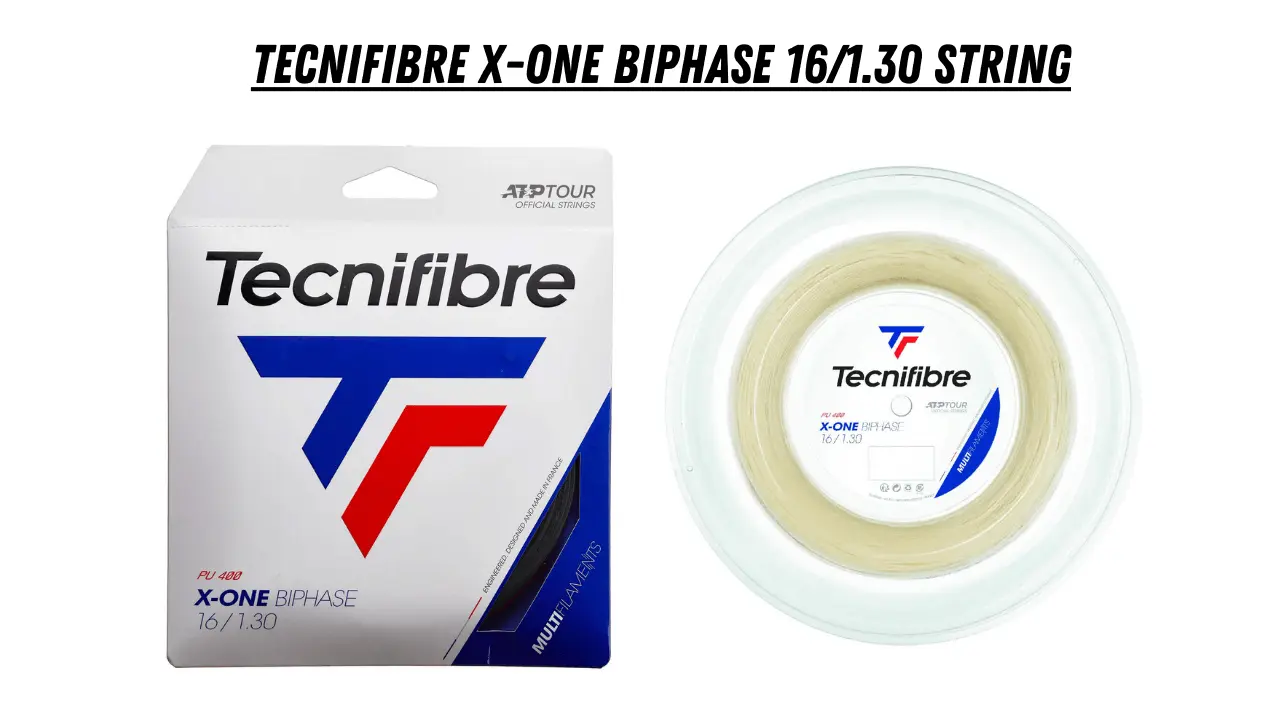
If you want the feel of natural gut without the $50 price tag, Tecnifibre NRG2 is the premier choice.
During baseline play, the impact feel is plush and cushioned. The racket does the work, returning easy power on short swings. It is highly arm-friendly, making it my top recommendation for club players managing wrist or elbow strain. However, topspin players will find that it frays quickly as the outer sheath wears down.
Solinco Hyper-G: Square Spin Bargain
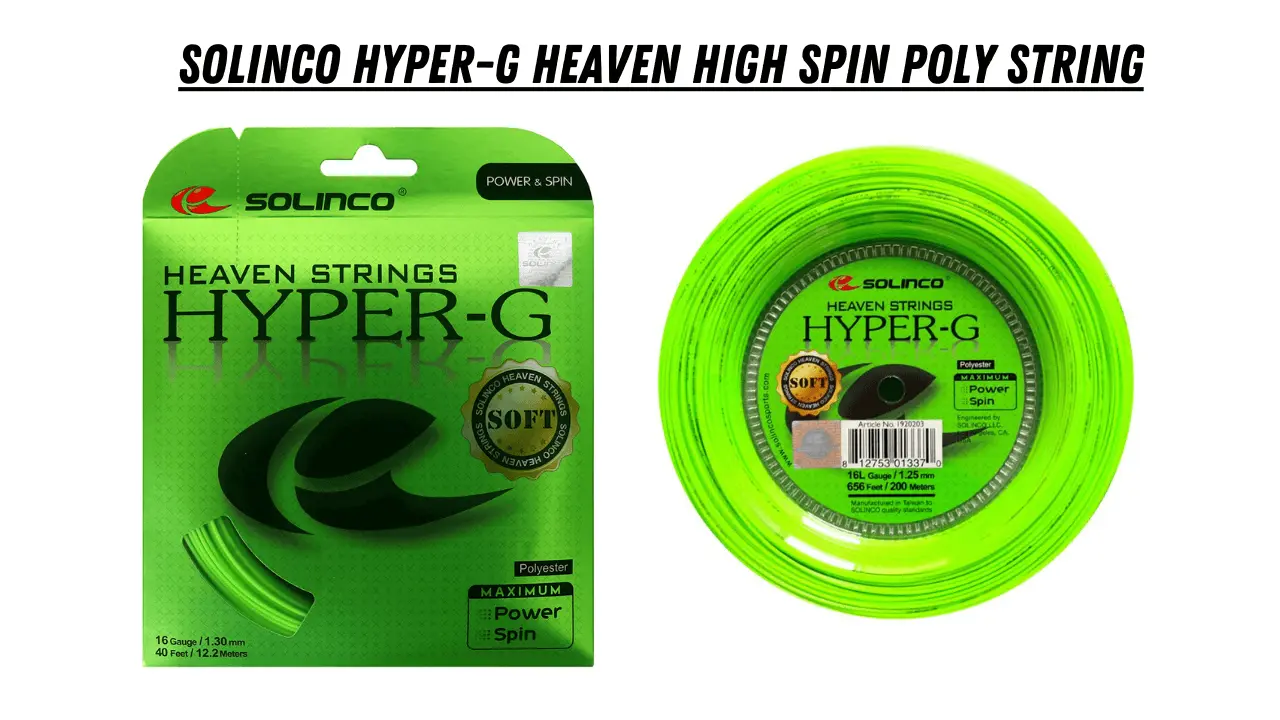
Solinco Hyper-G is an incredibly popular bright green co-poly known for its square profile and exceptional spin snapback.
On court, Hyper-G feels slightly softer and more forgiving than Babolat RPM Blast. It has superior tension stability, meaning it holds its playability curve for roughly 15 hours before dropping. The square profile bites the ball cleanly on vertical baseline cuts. It is a superb choice for advanced juniors and college players.
Babolat VS Touch: Natural Gut Gold Standard
Babolat VS Touch represents the absolute pinnacle of string playability. Made of natural beef intestines, it is incredibly elastic.
Playtesting VS Touch is a luxurious experience. The ball feels like it rests on the string bed for an eternity, allowing you to guide and place touch volleys with ease. It absorbs virtually all high-frequency shock, providing unmatched arm protection. It also holds its tension until it breaks, though it is expensive and must be kept dry.
Prince Synthetic Gut Duraflex: Budget Workhorse
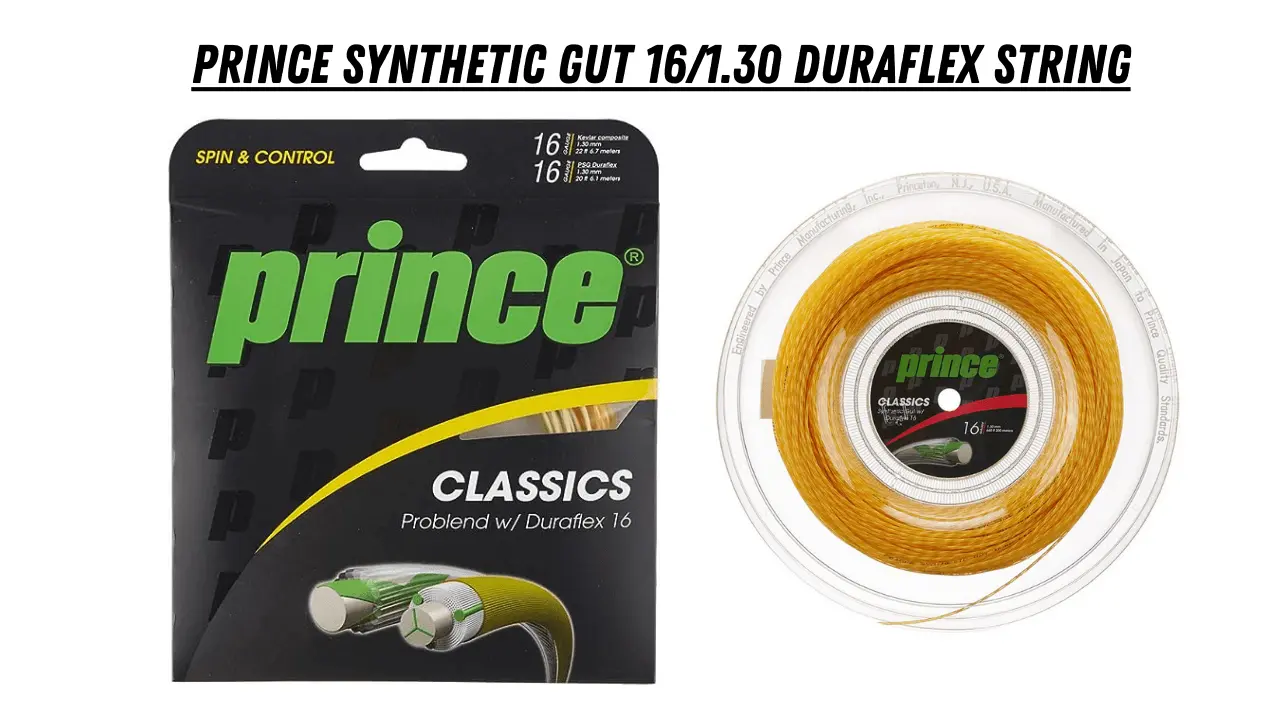
Prince Synthetic Gut with Duraflex is the most famous budget string in tennis history. It features a solid nylon core wrapped in synthetic filaments.
On court, Prince Synthetic Gut provides a predictable, medium-firm response. It is a highly balanced string that does not excel in spin or power, but offers consistent playability and great durability under $8 per set. It is the ideal choice for beginners and recreational players on a budget.
5. How We Tested: Testing Methodology
To provide authentic, playtest-backed recommendations, our stringing team implemented a strict testing protocol:
- Playtesters: Three playtesters with NTRP ratings ranging from 3.5 (intermediate) to 5.0 (advanced tournament player).
- Stringing Machine: All rackets were strung on a professional electronic tension pull machine to guarantee stringing accuracy.
- Racket Used: All strings were playtested in a standard Wilson Blade 98 16x19 v9 racket.
- Test Metrics: Strings were evaluated on Control, Spin, Power, Comfort, and Tension Longevity over 15 hours of baseline and service drills.
6. Head-to-Head Comparison Table
| Specification | Luxilon ALU Power | Babolat RPM Blast | Tecnifibre NRG2 | Solinco Hyper-G | Babolat VS Touch | Prince Duraflex |
|---|---|---|---|---|---|---|
| Material | Co-Polyester | Co-Polyester | Multifilament Nylon | Co-Polyester | Natural Gut | Solid Core Nylon |
| Profile | Round | Octagonal | Round | Square | Round | Round |
| Stiffness | High | Very High | Low (Soft) | Medium-High | Very Low | Medium |
| Playability Life | 10 hours | 8 hours | 30+ hours | 15 hours | 40+ hours | 25 hours |
| Tension Stability | Low | Low | Very High | Medium | Maximum | High |
7. How to Choose the Best Tennis Strings in 2026
- Select Luxilon ALU Power if you are an advanced player (NTRP 4.0+), have a fast swing, generate your own power, and want ultimate control.
- Select Babolat RPM Blast if you hit with heavy topspin, play an aggressive baseline game, and want a crisp, spin-friendly response.
- Select Tecnifibre NRG2 if you prioritize comfort, suffer from arm joint pain, want easy power, and prefer a soft, classic feel.
- Select Solinco Hyper-G if you are a tournament-level player who wants spin and wants strings that maintain playability longer than RPM Blast.
- Select Babolat VS Touch if you want the absolute ultimate in comfort, ball pocketing feel, and tension longevity.
- Select Prince Synthetic Gut Duraflex if you want a reliable, highly cost-effective string setup under $10.
The Playtest Standings: Our Top Recommendations
Luxilon ALU Power 125
Pros
- ✓Pinpoint directional control
- ✓High topspin snapback potential
- ✓Crisp contact feel
Cons
- ✗Rapid tension loss
- ✗Stiff on off-center hits
"Luxilon ALU Power remains the undisputed benchmark for advanced players who swing fast and want ultimate control."
*RacketEdge is an Amazon Associate. We earn a commission on qualifying purchases.
Babolat RPM Blast 125
Pros
- ✓Massive spin bite
- ✓Low launch angle
- ✓Solid stability
Cons
- ✗Harsh on the elbow
- ✗Feels dead quickly
"The string made famous by Rafael Nadal. Its slick silicone coating and octagonal shape bite the ball to produce heavy topspin loops."
*RacketEdge is an Amazon Associate. We earn a commission on qualifying purchases.
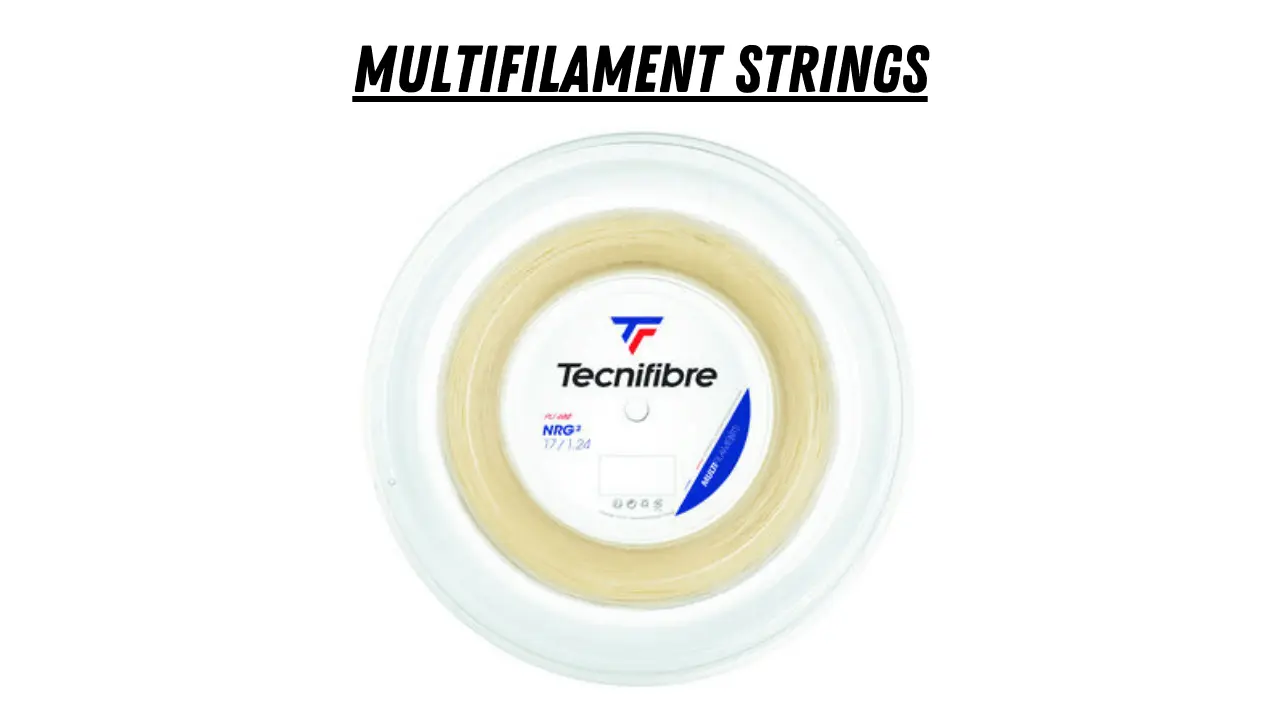
Tecnifibre NRG2 16
Pros
- ✓Plush comfort (great for tennis elbow)
- ✓Effortless baseline power
- ✓Outstanding tension retention
Cons
- ✗Frays easily on topspin hits
- ✗High launch angle
"The closest synthetic string to natural gut. NRG2 uses polyurethane fibers to absorb impact shock and provide comfortable depth."
*RacketEdge is an Amazon Associate. We earn a commission on qualifying purchases.
Solinco Hyper-G 125
Pros
- ✓Bright green design with massive spin snapback
- ✓Better tension stability than RPM Blast
- ✓Crisp, connected impact feedback
Cons
- ✗Stiffer response on off-center volleys
- ✗Polarizing aesthetic look
"An exceptional square-shaped polyester string that provides heavy baseline spin and outstanding playability longevity."
*RacketEdge is an Amazon Associate. We earn a commission on qualifying purchases.
Babolat VS Touch Natural Gut
Pros
- ✓Unmatched ball pocketing, touch, and feel
- ✓Maximum arm protection and vibration damping
- ✓Holds tension perfectly until breakage
Cons
- ✗Very high price per set
- ✗Sensitive to high moisture and rain
"The absolute gold standard of tennis strings. Unmatched in comfort, feel, and playability lifespan."
*RacketEdge is an Amazon Associate. We earn a commission on qualifying purchases.
Pros
- ✓Incredibly low price point
- ✓Duraflex wrap improves wear resistance
- ✓Predictable, balanced response
Cons
- ✗Average spin generation
- ✗Lacks premium ball feel
"The most famous budget string in tennis history. A highly reliable solid-core nylon that performs well without breaking the bank."
*RacketEdge is an Amazon Associate. We earn a commission on qualifying purchases.
Frequently Asked Questions
How does string material affect tennis elbow?
Stiff polyester strings transmit high-frequency impact vibrations to your forearm, increasing the risk of tennis elbow. Flexible multifilament and natural gut strings absorb shock, making them highly arm-friendly.
What is the standard tennis string gauge?
The standard gauge is 16 (1.30mm) or 17 (1.25mm). A 16 gauge string is thicker, offering better durability. A 17 gauge string is thinner, providing better spin and ball feel.
Do polyester strings lose tension fast?
Yes. Polyester strings lose up to 10% of their tension within the first 24 hours after stringing, and go 'dead' (losing elasticity) after 10 to 12 hours of play.
Can beginners play with polyester strings?
No. Beginners do not swing fast enough to benefit from polyester strings. They should use soft synthetic gut or multifilament strings to gain depth and protect their joints.
Why is natural gut so expensive?
Natural gut is made from cow intestines, requiring a complex, chemical manufacturing process that takes weeks. However, it offers unmatched tension retention and comfort.
What is hybrid stringing, and does it work?
Yes. Hybrid stringing involves using two different string types in the mains and crosses (e.g. polyester in the mains for spin, and multifilament in the crosses for comfort). It is highly effective for blending play styles.
How often should I restring my tennis racket?
A good rule of thumb is to restring your racket as many times a year as you play per week (e.g. if you play 3 times a week, restring 3 times a year). However, polyester strings should be replaced every 15-20 hours of play regardless.
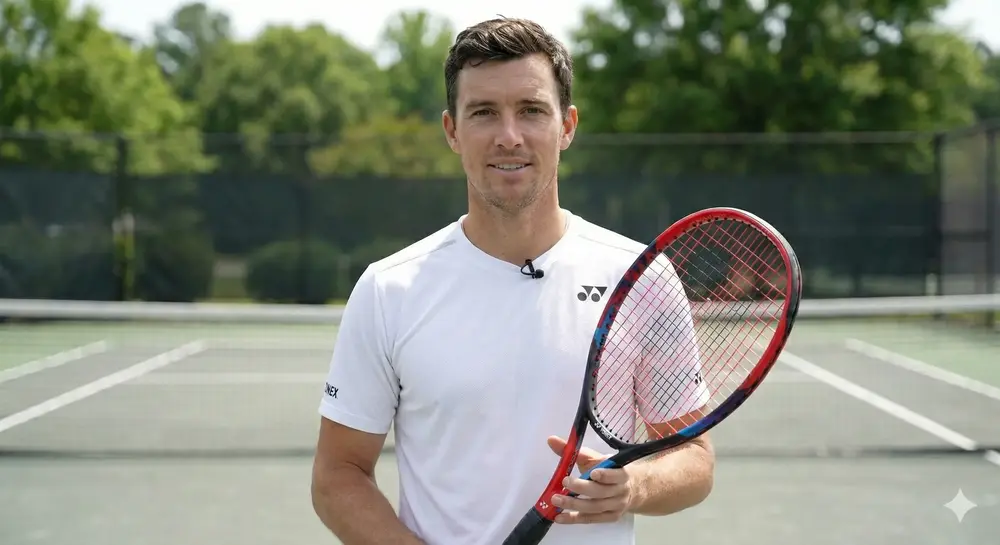
Chris Davies
Chris Davies reviews, playtests, and strings tennis gear. His shootouts compare specifications under uniform conditions, providing intermediate and advanced players with verified court metrics.